




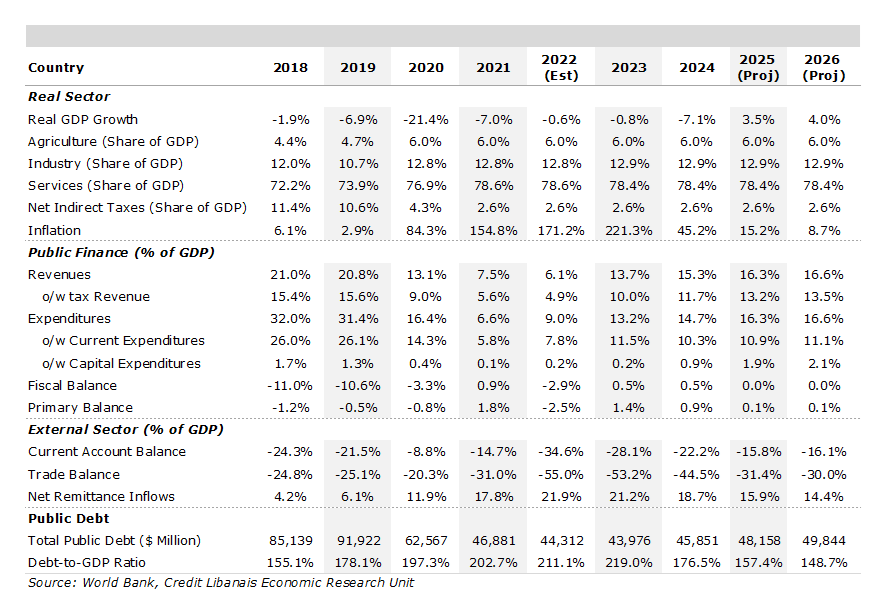
The World Bank recently released its Lebanon Economic Monitor (LEM) Winter-2025 report titled “A Fragile Rebound” where it tackled the latest developments and policies related to the Lebanese economy over the past six months. The World Bank projected the Lebanese economy to have grown by 3.5% in 2025 amid a rebound in tourism, “early signs” of macroeconomic stabilization, and gains following years of economic contraction. In details, the World Bank pointed out that year-to-date statistics up to April 2025 show an 18% annual improvement in construction permits and ~49% rally in cement deliveries. Night-time lights, an easily available and highly frequent indicator that is correlated to economic activity, shows that luminosity has increased by 32.5% on an annual basis during the first half of 2025. The report attributed the projected growth for 2025 to the pickup in consumption which contributed 1.8 percentage points (pp) to real GDP growth, mainly supported by remittances and a higher level of dollarization of private sector wages. Other contributors to the 3.5% projected growth for 2025 include public expenditures (0.9 pp improvement on the back of higher levels of government spending), net exports (0.5 pp contribution to GDP growth), investments (a pale 0.2 pp contribution due to the high levels of uncertainty). The World Bank commented, however, that the 3.5% growth for the year 2025 represents a downward revision from the 4.7% growth estimated in the Spring 2025 edition of the Lebanon Economic Monitor report, as the ongoing regional conflict which escalated at the peak of the tourism season during the month of June 2025 backfired on tourism activity. In addition, the World Bank report stated that the election of a President in early 2025, the formation of a new government, and the progress on long-due reforms (namely the amendment of the Banking Secrecy Law and the government making crucial appointments) have resulted in some institutional and political stabilization. The report noted, however, that progress on reforms is still lagging on other fronts while commenting that Lebanon needs to achieve a “rapid progress” on several items on the reform agenda in order to surmount the myriad of challenges it is currently facing. In details, the World Bank noted that the implementation of the banking sector restructuring law hinges on the passing of the financial gap law in the parliament. In addition, the World Bank suggested that several key reforms could be accelerated such as restoring debt sustainability, creating more fiscal room for institutional growth, improving public services and increasing social and reconstruction spending through progressive revenue mobilization. On the fiscal front, the report revealed that the debt to GDP ratio dropped to 157.4% in 2025 down from 176.5% in 2024, while adding that Lebanon is expected to achieve a fiscal balance in 2025 (zero budget deficit). The World Bank attributed this progress to better tax collection (13.2% of GDP vs an 11.7% level in 2024) and stronger non-tax revenues with custom revenues rallying by 193% on an annual basis during the first four months of 2025, yet pointed out that there still is ample room for improving the efficiency of revenue mobilization. Always in the same vein, the World Bank revealed that while the debt to GDP ratio has improved, its current level remains high, isolating Lebanon from international capital markets. Finally on the fiscal front, the report mentioned that the 2026 draft budget law anticipates fiscal equilibrium. On the current account front, the World Bank projected the deficit at 15.8% of GDP in 2025 down from 22.2% in 2024 on the back of an improvement in the export of services and sustained remittance inflows which remain understated by official statistics due to the exclusion of those flowing via informal channels. The report also pointed to the stability of the exchange rate since the month of August 2023, as better revenue collection, fiscal prudence, and the cessation of monetary financing have curbed liquidity in the local currency, better enabling the Central Bank to manage currency in circulation and ramp up foreign currency reserves. In figures, the World Bank mentioned that BDL’s foreign currency reserves have increased by ~$451 million between the months of August 2024 and August 2025 to $10.96 billion (covering ~6.8 months of imports) while noting that part of these reserves are being utilized to inject dollar liquidity into the economy in the form of partial deposit repayments under the provisions of circulars 158 and 166. The report also anticipated inflation to ebb to 15.2% in 2025 down from 45.2% in 2024 and 221.3% in 2023, thanks to exchange rate stability, the fading of exchange rate pass-through effects, and the almost complete dollarization of the CPI basket. On the outlook front, the report projects the Lebanese economy to grow by 4% in 2026 on the condition that progress on reform continues, political stability persists and the government succeeds in garnering “modest” reconstruction inflows. In the same regard, the World Bank anticipates remittance flows and tourism activity to be the main drivers of growth in 2026, yet cautioned that these drivers are bound by some risks. Inflation is also projected to fall to single-digit figures in 2026 for the first time since 2019 at 8.7% owing to a continued stability of the exchange rate, yet the level remains higher than international levels owing to limited competition and the prevalence of “oligopolistic market structures”. The World Bank projects the current account deficit to widen to 16.1% of GDP in 2026 (from 15.8% in 2025) as a result of a higher imports bill for construction material, while adding that a depreciation of the dollar against the Euro currency would further increase Lebanon’s import bill.
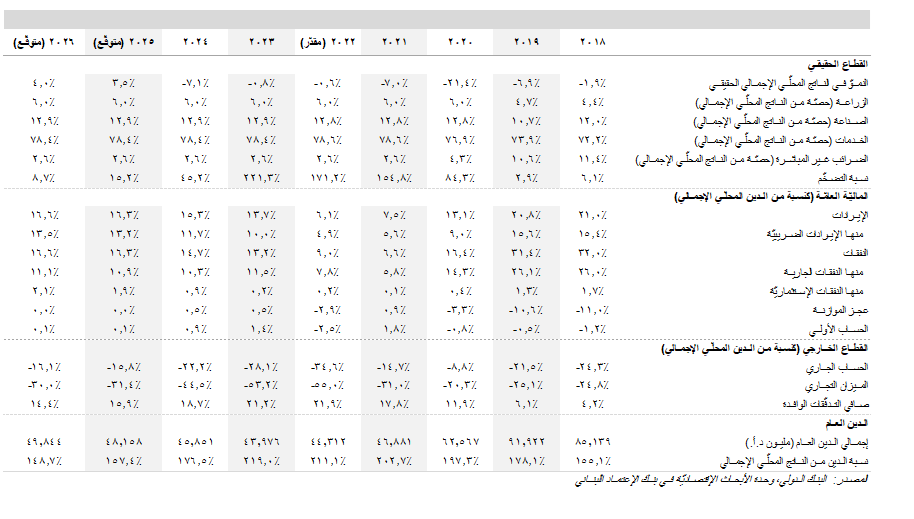
أصدَر البنك الدولي تقرير حول الآفاق الإقتصاديّة للبنان لشتاء العام 2026 تحت عنوان "إنتعاش هش" حيث تناول آخر التطورات والسياسات المتعلّقة بالإقتصاد اللبناني. وتوقّع البنك الدولي بأن يكون الإقتصاد اللبناني قد سجّل نموّاً متواضعاً بنسبة 3.5% في عام 2025، وسط انتعاش في قطاع السياحة وبوادر إستقرار الإقتصاد الكلّي وتحقيق مكاسب بعد سنوات من الإنكماش الإقتصادي. بالتفصيل، أشار البنك الدولي إلى أنّ الإحصاءات التراكمية خلال الأشهر الأربعة الأولى من العام 2025 تُظهر تحسناً سنوياً بنسبة 18% في رخص البناء وإرتفاعاً بنسبة 49% في تسليمات الإسمنت. وتُظهر بيانات الإضاءة الليليّة وهي مؤشر متوفر بسهولة ويرتبط بالنشاط الإقتصادي زيادة في شدّة الإضاءة بنسبة 32.5% على أساس سنوي خلال النصف الأول من عام 2025. وقد عزا التقرير النموّ المتوقّع لعام 2025 إلى تحسّن الإستهلاك الذي ساهم بنسبة 1.8 نقاط مئوية في نمو الناتج المحلّي الإجمالي الحقيقي، مدعومًا بشكل رئيسي بتحويلات المغتربين وإرتفاع مستوى الدولرة في أجور القطاع الخاص. وتشمل العوامل الأخرى المساهمة في النمو المتوقع لعام 2025 الإنفاق العام (مساهمة بنسبة 0.9 نقطة مئوية نتيجة إرتفاع مستويات الإنفاق الحكومي) وصافي الصادرات (مساهمة بنسبة 0.5 نقطة مئوية في نموّ الناتج المحلّي الإجمالي) والإستثمارات (مساهمة ضئيلة بنسبة 0.2 نقطة مئوية بسبب إرتفاع مستويات عدم اليقين). ومع ذلك، علّق البنك الدولي بأن نسبة النمو البالغة 3.5% لعام 2025 تبقى أدنى من نسبة النمو المتوقّعة في نسخة ربيع العام 2025 والمقدّرة ب4.7%، حيث أثّر النزاع الإقليمي الذي تصاعد في ذروة الموسم السياحي خلال شهر حزيران 2025 بشكل سلبي على النشاط السياحي. بالإضافة إلى ذلك، ذكر تقرير البنك الدولي بأنّ إنتخاب رئيس للجمهورية مطلع العام 2025 وتشكيل حكومة جديدة والتقدّم المحرز في الإصلاحات التي طال إنتظارها (وتحديداً تعديل قانون السريّة المصرفية والتعيينات الحاسمة للحكومة) قد أسفروا عن بعض الإستقرار المؤسسّي والسياسي. إلا أنّ التقرير أشار إلى أنّ التقدم في الإصلاحات لا يزال بطيئاً على جبهات أخرى، مؤكداً على ضرورة إحراز تقدم سريع في العديد من بنود أجندة الإصلاح في لبنان للتغلب على التحديات الكثيرة التي تواجهها البلاد حالياً. بالتفصيل، أشار البنك الدولي إلى أنّ تطبيق قانون إعادة هيكلة القطاع المصرفي مرهون بإقرار قانون الفجوة الماليّة في البرلمان. كما اقترح البنك الدولي تسريع وتيرة العديد من الإصلاحات الرئيسيّة، مثل استعادة الإستدامة للدين العام وتوفير مساحة ماليّة أكبر للنمو المؤسّسي وتحسين الخدمات العامة وزيادة الإنفاق الاجتماعي وإعادة الإعمار من خلال تحسين الإيرادات بشكل تدريجي. على الصعيد المالي، قدّر التقرير بأن تكون نسبة الدين إلى الناتج المحلّي الإجمالي قد انخفضت إلى 157.4% في عام 2025 من 176.5% في عام 2024، مع توقّعه بتحقيق لبنان لتوازن مالي في العام 2025 (صفر عجز في الموازنة). ونسب البنك الدولي هذا التقدّم إلى تحسّن الجباية الضريبيّة (13.2% من الناتج المحلّي الإجمالي مقابل 11.7% في عام 2024) وزيادة الإيرادات غير الضريبيّة حيث إرتفعت الإيرادات الجمركيّة بنسبة 193% على أساس سنوي خلال الأشهر الأربعة الأولى من عام 2025، إلا أنّه أشار إلى وجود مجال واسع بعد لتحسين كفاءة تحصيل الإيرادات. وفي السياق عينه، أوضح البنك الدولي أنه على الرغم من تحسّن نسبة الدين إلى الناتج المحلّي الإجمالي، إلا أنّ المستوى الحالي لا يزال مرتفعاً مما يعزل لبنان عن أسواق رأس المال الدوليّة. أخيراً في هذا المجال أشار التقرير إلى أنّ مشروع قانون الموازنة لعام 2026 يتوقع توازن في الموازنة لعام آخر على التوالي. على صعيد الحساب الجاري، توقّع البنك الدولي بأن يبلغ العجز 15.8% من الناتج المحلّي الإجمالي في عام 2025 مقارنةً مع 22.2% في عام 2024، وذلك بفضل تحسّن تصدير الخدمات وإستمرار تدفق تحويلات المغتربين، التي لا تزال الإحصاءات الرسميّة تُقلل من شأنها بسبب إستبعاد التحويلات التي تتم عبر القنوات غير الرسميّة. وأشار التقرير أيضاً إلى إستقرار سعر الصرف منذ شهر آب 2023، حيث ساهم كل من تحسّن تحصيل الإيرادات والإنضباط المالي ووقف التمويل النقدي في الحد من السيولة بالعملة المحليّة، مما مكّن البنك المركزي من إدارة النقد المتداول بشكل أفضل وزيادة الإحتياطيات بالعملة الأجنبي. وقد أشار البنك الدولي إلى أنّ إحتياطيات مصرف لبنان بالعملات الأجنبيّة قد إرتفعت بنحو 451 مليون دولار أمريكي بين شهريّ آب 2024 وآب 2025 لتصل إلى 10.96 مليار د.أ. (ما يكفي لتغطية واردات لمدة 6.8 أشهر تقريباً)، مع الملاحظة بأن جزءاً من هذه الإحتياطيات يُستخدم لضخ سيولة بالدولار في الإقتصاد على شكل سداد جزئي للودائع بموجب أحكام التعميمين 158 و166. كما توقّع التقرير إنخفاض نسبة التضخّم إلى 15.2% في عام 2025 من 45.2% في عام 2024 و221.3% في عام 2023، وذلك بفضل إستقرار سعر الصرف وتلاشي تأثيرات تقلّبات أسعار الصرف وشبه الدولرة الشاملة في سلّة مؤشر أسعار المستهلك. أمّا فيما يتعلّق بالنظرة المستقبليّة، فيتوقّع التقرير نمو الإقتصاد اللبناني بنسبة 4% في عام 2026 شريطة التقدم في إجراء الإصلاحات وإستمرار الإستقرار السياسي ونجاح الحكومة في جذب تدفقات متواضعة لإعادة الإعمار. في السياق نفسه، يتوقّع البنك الدولي بأن يكون القطاع السياحي وتحويلات المغتربين المحرّكين الرئيسيين للنمو في عام 2026، إلّا أنّه حذّر من أنّ هذين المحرّكين محفوفان ببعض المخاطر. كما يتوقع التقرير بأن تنخفض نسبة التضخّم في عام 2026 إلى ما دون ال10% لأول مرّة منذ عام 2019 عند مستوى 8.7%، وذلك بفضل إستمرار إستقرار سعر الصرف، إلّا أنّه أشار إلى أنّ مستوى التضخّم لا يزال أعلى من المستويات العالميّة نتيجةً لمحدودية المنافسة وإنتشار الهياكل الإحتكاريّة في السوق. ويتوقّع البنك الدولي بأن يتّسع عجز الحساب الجاري إلى 16.1% من الناتج المحلّي الإجمالي في عام 2026 من 15.8% في عام 2025 نتيجة لارتفاع فاتورة واردات مواد الإعمار، مضيفاً بأنّ تراجع سعر صرف الدولار مقابل اليورو سيزيد من فاتورة واردات لبنان.