





According to BDL statistics, the combined balance sheet of commercial banks operating in Lebanon widened by 4.97% (LBP 18,710 billion) during the first eight months of the current year to LBP 394,807 billion ($261.90 billion), up from LBP 376,097 billion ($249.48 billion) in December 2018. On an annual basis, the combined assets of the resident banking sector came in 9.83% higher than the LBP 359,473 billion ($238.46 billion) reading reported at end of August of last year.
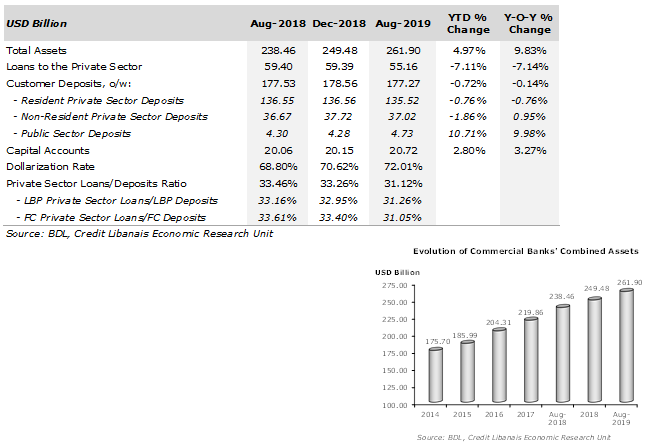
On the funding side of the balance sheet, customer deposits fell by 0.72% (LBP 1,935 billion) YTD August 2019 to LBP 267,239 billion ($177.27 billion), down from LBP 269,173 billion ($178.56 billion) in December 2018. Said contraction came as a result of the 0.76% (LBP 1,566 billion) drop in the deposits of the resident private sector to LBP 204,293 billion ($135.52 billion), accompanied by a 1.86% (LBP 1,059 billion) decrease in the deposits of the non-resident private sector to LBP 55,811 billion ($37.02 billion), which were, however, met by a 10.71% (LBP 690 billion) hike in public sector deposits to LBP 7,135 billion ($4.73 billion). From a currency denomination standpoint, deposits in Lebanese Pounds receded by 4.43% (LBP 3,703 billion) during the first eight months of this year to LBP 79,939 billion ($53.03 billion), while foreign currency deposits rose by 0.95% (LBP 1,768 billion) to LBP 187,300 billion ($124.25 billion). In this context, the deposit dollarization rate increased to 72.01% by end of August, from 70.62% at end of 2018 and 68.80% in August of the previous year. On an annual basis, customer deposits narrowed by 0.14% from LBP 267,621 billion ($177.53 billion) in August 2018.
On the lending front, loans to the private sector (residents and non-residents) plunged by 7.11% (LBP 6,369 billion) during the first eight months of 2019 to LBP 83,155 billion ($55.16 billion), down from LBP 89,524 billion ($59.39 billion) in December 2018. The loans portfolio also sank by 7.14% on an annual basis, resulting in a ratio of net loans to customer deposits of 31.12%, compared to 33.26% at end of 2018 and 33.46% in August 2018. More specifically, the ratio of LBP-denominated private sector loans to LBP deposits stood at 31.26% by end of August 2019, in comparison with 32.95% at year-end 2018 and 33.16% in August of last year. Similarly, the ratio of foreign currency-denominated private sector loans to foreign currency deposits fell to 31.05%, from 33.40% in December 2018 and 33.61% at end of August 2018.
The consolidated capital accounts of commercial banks operating in Lebanon rose to just over LBP 31,234 billion ($20.72 billion) at end of August 2019, compared to LBP 30,382 billion ($20.15 billion) at end of 2018 and LBP 30,246 billion ($20.06 billion) at end of August 2018. This can be explained by banks’ continuous reinforcement of their capital base in order to meet BDL’s solvency requirement thresholds.
تُظهِر إحصاءات البنك المركزي إرتفاعاً بنسبة 4.97% (18،710 مليار ل.ل.) في الميزانيّة المجمَّعة للمصارف التجاريّة العاملة في لبنان خلال الأشهُر الثمانية الأولى من العام الحالي إلى 394،807 مليار ل.ل. (261.90 مليار د.أ.)، مقابِل 376،097 مليار ل.ل. (249.48 مليار د.أ.) في نهاية العام السابق. أمّا على صعيدٍ سنويٍّ، فقد زادت موجودات القطاع المصرفي المقيم بنسبة 9.83% مقارنةً بالمستوى الذي كانت عليه في شهر آب 2018، والبالغ حينها 359،473 مليار ل.ل. (238.46 مليار د.أ.).
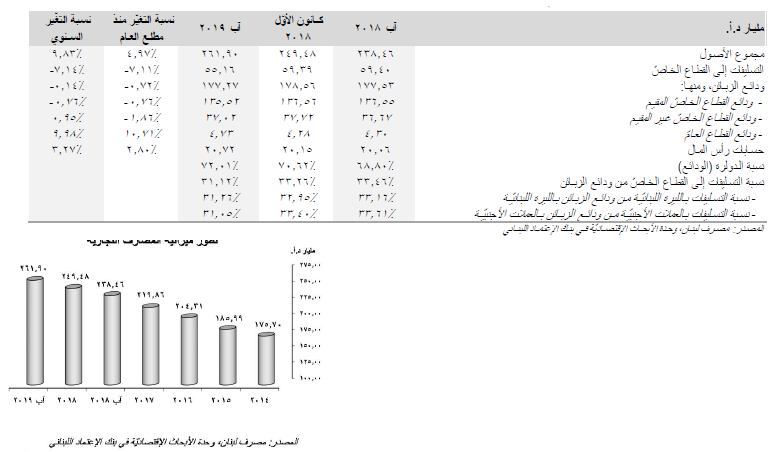
أمّا لجهة الموارد الماليّة، فقد تراجعت ودائع الزبائن (قطاع خاصّ وقطاع عامّ) بنسبة 0.72% (1،935 مليار ل.ل.) لغاية شهر آب 2019 إلى 267،239 مليار ل.ل. (177.27 مليار د.أ.)، من 269،173 مليار ل.ل. (178.56 مليار د.أ.) في نهاية العام 2018. ويأتي هذا التراجُع نتيجة إنكماش ودائع القطاع الخاصّ المقيم بنسبة 0.76% (1،566 مليار ل.ل.) إلى 204،293 مليار ل.ل. (135.52 مليار د.أ.)، توازياً مع تدنّي ودائع القطاع الخاصّ غير المقيم بنسبة 1.86% (1،059 مليار ل.ل.) إلى 55،811 مليار ل.ل. (37.02 مليار د.أ.)، قابلتهما زيادةٌ في ودائع القطاع العامّ بنسبة 10.71% (690 مليار ل.ل.) إلى 7،135 مليار ل.ل. (4.73 مليار د.أ.). وقد تقلّصت ودائع الزبائن المعنونة بالليرة اللبنانيّة بنسبة 4.43% (3،703 مليار ل.ل.) خلال الأشهُر الثمانية الأولى من هذا العام إلى 79،939 مليار ل.ل. (53.03 مليار د.أ.)، فيما نَمَت الودائع المعنونة بالعملات الأجنبيّة بنسبة 0.95% (1،768 مليار ل.ل.) لتصل إلى 187،300 مليار ل.ل. (124.25 مليار د.أ.). في هذا السياق، إرتفعت نسبة الدولرة في ودائع القطاع الخاصّ إلى 72.01% مع نهاية شهر آب، من 70.62% في نهاية العام 2018 و68.80% في شهر آب من العام الفائت. أمّا على صعيدٍ سنويٍّ، فقد سَجَّلَت محفظة الودائع تراجعاً بنسبة 0.14% من 267،621 مليار ل.ل. (177.53 مليار د.أ.) في آب 2018.
في المقلب الآخر، إنكمشت تسليفات المصارف اللبنانيّة إلى القطاع الخاصّ (المقيمين وغير المقيمين) بنسبة 7.11% (ما يوازي 6،369 مليار ل.ل.) مع نهاية الشهر الثامن من العام 2019 إلى 83،155 مليار ل.ل. (55.16 مليار د.أ.)، مقابل 89،524 مليار ل.ل. (59.39 مليار د.أ.) في كانون الأوّل 2018. كذلك تقلّصت التسليفات بنسبة 7.14% على صعيدٍ سنويٍّ، ليصل بذلك معدّل التسليفات من ودائع الزبائن إلى 31.12%، مقابل 33.26% في نهاية العام المنصرم و33.46% في آب 2018. في التفاصيل، وصلت نسبة التسليفات إلى القطاع الخاصّ المعنونة بالليرة اللبنانيّة من مجموع الودائع المعنونة بالعملة الوطنيّة إلى 31.26% مع نهاية شهر آب من العام الجاري، مقارنةً مع 32.95% في نهاية العام 2018 و33.16% في نهاية شهر آب 2018. كذلك إنخفض معدّل التسليفات المعنونة بالعملات الأجنبيّة إلى 31.05% من مجموع الودائع بالعملات الأجنبيّة، من 33.40% في كانون الأوّل 2018 و33.61% في آب من العام المنصرم.
وقد تخطّت حسابات رأس المال المجمّعة العائدة للمصارف التجاريّة العاملة في لبنان عتبة ال31،234 مليار ل.ل. (20.72 مليار د.أ.) في نهاية الشهر الثامن من العام 2019، مقابل 30،382 مليار ل.ل. (20.15 مليار د.أ.) في نهاية العام 2018 و30،246 مليار ل.ل. (20.06 مليار د.أ.) في نهاية شهر آب 2018. يعود ذلك بالأخصّ إلى لجوء المصارف إلى تعزيز رساميلها الخاصة لتبقى ملتزمة بمعايير لجنة بازل ومصرف لبنان المتعلّقة بنسب كفاية رأس المال.

