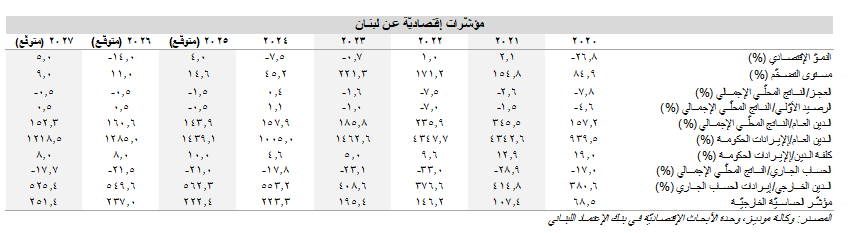





Moody’s Investors Service, the international rating agency, published on May 21, 2026 a credit opinion on the Government of Lebanon, maintaining the country’s “C” rating and stable outlook, a rating which reflects that losses for bondholders are likely to exceed 65%. The rating agency cited a set of credit strengths and challenges underlying Lebanon’s rating, with the former pivoting around the commitment of international donors to support the country conditional upon the implementation of the IMF reform program added the renewed reform momentum under the newly elected President and appointed Government. On the other hand, credit challenges included the propagation of a harsh economic, financial & social crisis, a severely weak institutional & governance strength (thereby impeding reform implementation), and the sizeable human displacement & infrastructure damage resulting from the war. In parallel, Moody’s stated that the stable outlook indicates that Lebanon’s rating is likely to remain unchanged over the near future. The agency also mentioned that the country’s rating is unlikely to change unless fiscal consolidation and structural reform implementation are undertaken on the one hand and an improvement in revenue generation capacity & the country’s adjustment to a new growth model are achieved on the other hand so as to guarantee debt sustainability in the future.
From another standpoint, it is worth clarifying that a rating by the agency takes into consideration four major elements, namely, economic strength, institutional and governance strength, fiscal strength, and susceptibility to event risk. Lebanon scored “caa1” in economic strength given the steep economic contraction since 2019 and the collapse of its previous growth model. These challenges have been further intensified by population displacement and damage to infrastructure caused by the outbreak of hostilities since September 2024. On a positive note, the agency pointed out that remittances and travel-related income from the Lebanese diaspora are aiding in supporting income levels. On the institutional and governance strength front, Lebanon was assigned a score of “ca” on the back of the very weak quality of institutions and the ongoing default since March 2020. In addition, the rating reflects a frail governance environment characterized by an anemic fiscal policy effectiveness (which is constrained by the slowdown in economic activity and revenue generation), with monetary policy also being constrained by the “effective dollarization of daily transactions”. With respect to fiscal strength, the former was assessed as “ca”, a fact that portrays the Government’s high indebtedness level (debt at 144% of GDP in 2025) that could result in large losses to creditors in the event of default. Lastly, Lebanon scored “ca” in susceptibility to event risk driven by the country’s liquidity risk & external vulnerability risk, added the high exposure of the banking sector to sovereign debt.
Moody’s added that recent diplomatic efforts led by the United States sought to advance a more durable peace and security framework between Israel and Lebanon through talks held in mid-May. The discussions came amid continued reports of ceasefire violations, highlighting the fragile security environment and ongoing geopolitical risks. While the negotiations may help prevent further escalation, the possibility of renewed conflict remains significant, posing continued threats to Lebanon’s economy, investor sentiment, and humanitarian conditions. In light of the intensified regional conflict and recent local hostilities, Lebanon’s economic outlook has deteriorated sharply with real GDP expected to contract by 14% in 2026 according to Moody’s. In details, the renewed violence has displaced more than one million people, disrupting labor markets, weakening consumer demand, and severely affecting productive sectors such as agriculture, manufacturing, and construction through damage to infrastructure, capital, and supply chains. Service industries, including tourism, healthcare, and education, have also suffered from the broader economic slowdown. The country remains heavily dependent on imports, which are partially offset by tourism receipts and remittance inflows, while adding that these foreign currency inflows may weaken because of regional instability, rising oil prices, and potential disruptions to diaspora transfers. Although discussions with the IMF regarding up to $1 billion in emergency financing may provide temporary fiscal relief and support urgent social spending, such assistance alone would not resolve Lebanon’s structural economic weaknesses. It added that sustainable recovery will require comprehensive debt restructuring, macroeconomic stabilization measures, and long-term institutional reforms.
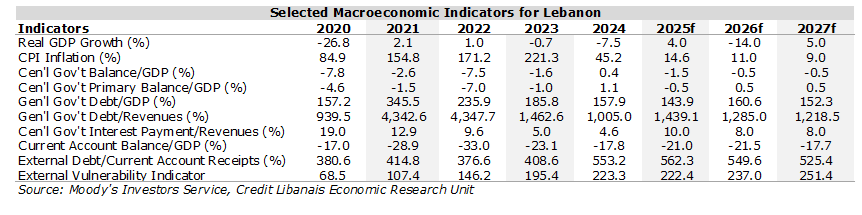
أصدرت وكالة التصنيف الدوليّة موديز بتاريخ 21 أيّار 2026 تحديثاً للتصنيف الإئتماني السيادي للحكومة اللبنانيّة حافظت من خلاله على تصنيف لبنان السيادي عند "C" وعلى النظرة المستقبليّة المستقرّة علماً بأنّ هذا التصنيف يعكس إحتماليّة كبيرة بأن تتخطّى خسائر حاملي سندات اليوروبوندز نسبة ال65%، كما وعرضت أبرز نقاط القوّة وأهمّ التحدّيات التي تراها ذات صِلَة لتحديد وتعليل هذا التصنيف السيادي. وتجلّت نقاط القوَّة في إلتزام الدول المانحة بدعم لبنان شريطة تطبيق برنامج الإصلاح المعدّ من قبل صندوق النقد الدولي بالإضافة إلى الزخم الإصلاحي الذي رافق إنتخاب رئيس جديد للجمهوريّة وتعيين حكومة جديدة. في المقابل، إختصرت وكالة موديز التحدّيات القائمة كالتالي: التعرّض الآخذ بالإرتفاع لأزمة إقتصاديّة وماليّة وإجتماعيّة حادّة كما وضعف المؤسّسات ونظام الحوكمة (وهو ما يؤخّر الدعم الخارجي) كما وحالة النزوح الداخلي والأضرار الكبيرة في البنى التحتيّة الناجمة عن الحرب. وقد أشارت الوكالة إلى أنّ النظرة المستقبليّة المستقرّة تشير إلى أنّها لا ترتقب أي تحسّن في تصنيف لبنان في المدى القريب. وقد أشارت الوكالة أيضاً إلى أنّ تصنيف لبنان سيبقى على حاله إلاّ إذا تمّ تطبيق إصلاحات جوهريّة على مدى سنوات عدّة من جهّة بالإضافة إلى تحسين القدرة على تحصيل الإيرادات وحصول تقدّم ملحوظ في ديناميكيّة الدين وتكيّف البلاد مع نموذج نموّ إقتصادي جديد من جهّة أخرى وذلك لضمان إستدامة الدين في المستقبل.
من منظارٍ آخر، يجدر التوضيح أنّ التصنيف الذي تمنحه وكالة موديز يأتي بناءً على نتائج مسجَّلة على أربع مستويات، ألا وهي: القوّة الإقتصاديّة، قوّة المؤسّسات والحوكمة، القوّة الماليّة، والتعرّض لمخاطر الأحداث. وقد سجّل لبنان نتيجة "caa1" في معيار القوّة الإقتصاديّة نظراً للإنكماش الإقتصادي الكبير منذ العام 2019. وقد تفاقمت هذه التحديّات بشكل إضافي نتيجة نزوح السكان والأضرار التي لحقت بالبنية التحتية بسبب اندلاع الحرب منذ شهر أيلول 2024. في السياق عينه، أشار التقرير إلى أنّه من ناحية إيجابيّة ساهمت كلٍّ من تحويلات المغتربين والإنفاق من قبل الجالية اللبنانيّة داخل البلاد بدعم مستويات الدخل. بالنسبة للقوّة المؤسّساتيّة، سجّل لبنان نتيجة "ca"، ما يعكس الضعف في بيئة الحوكمة وإستمرار التخلّف عن دفع الدين السيادي منذ شهر آذار 2020. بالإضافة إلى ذلك، يعكس التصنيف بيئة حوكمة هشة تتّسم بضعف فعاليّة السياسة الماليّة (التي يقيّدها تباطؤ النشاط الإقتصادي وتراجع القدرة على جني الإيرادات)، في حين يتمّ تقييد السياسة النقدية بفعل الدولرة الفعليّة للمعاملات اليوميّة. أمّا على صعيد القوّة الماليّة، فقد نال لبنان نتيجة "ca"، وهي نتيجة تعكس دين الدولة الكبير الذي قد يتسبّب بخسائر كبيرة للدائنين في حال تعثّرت الدولة عن الدفع. أخيراً، حصل لبنان على نتيجة "ca" في معيار التعرُّض لمخاطر الأحداث، نظراً لمخاطر السيولة والتعرّض الخارجي الكبير كما والتعرّض الكبير للقطاع المصرفي للدين السيادي.
وقد سعت الجهود الدبلوماسيّة الأخيرة التي قادتها الولايات المتحدة إلى الدفع نحو إطار أكثر استدامة للسلام والأمن بين إسرائيل ولبنان، وذلك من خلال المحادثات التي عُقدت في منتصف شهر أيّار. وجاءت هذه المناقشات وسط تقارير متواصلة عن إنتهاكات لوقف إطلاق النار، ما يسلّط الضوء على هشاشة الوضع الأمني وإستمرار المخاطر الجيوسياسية. ورغم أن هذه المفاوضات قد تساعد في الحد من إرتفاع وتيرة التصعيد، إلا أنّ إحتمال تجدّد النزاع لا يزال مرتفعاً، ما يواصل تهديد الإقتصاد اللبناني وثقة المستثمرين والأوضاع الإنسانيّة. في هذا السياق ومع تدهور الأوضاع الإقتصاديّة للبنان في ظل تصاعد النزاع الإقليمي والأعمال العدائيّة المحليّة الأخيرة، توّقعت الوكالة أن ينكمش الإقتصاد اللبناني بنسبة 14% في عام 2026. وفي التفاصيل، فقد أدّت موجة العنف المتجدّدة إلى نزوح أكثر من مليون شخص، مما تسبّب في إضطراب سوق العمل وإضعاف الطلب الإستهلاكي وإلحاق أضرار جسيمة بالقطاعات الإنتاجيّة مثل الزراعة والصناعة والبناء، نتيجة تضرّر البنية التحتيّة ورأس المال وسلاسل الإمداد. كذلك تأثّرت القطاعات الخدماتيّة، بما فيها السياحة والرعاية الصحيّة والتعليم، بالتباطؤ الإقتصادي الذي تشهده البلاد. ولا يزال لبنان يعتمد بشكل كبير على الواردات، والتي تُعوَّض جزئيّاً من خلال إيرادات السياحة وتحويلات المغتربين، مع الإشارة إلى أن هذه التدفقات من العملات الأجنبيّة قد تتراجع نتيجة عدم الإستقرار الإقليمي وارتفاع أسعار النفط واحتمال تأثّر تحويلات المغتربين بالأوضاع المستجدّة. وقد أضافت الوكالة بأنّه بالرغم من أنّ المناقشات مع صندوق النقد الدولي بشأن توفير تمويل طارئ قد تصل قيمته إلى مليار د.أ. ما قد يؤمّن دعماّ ماليّاً مؤقتاً ويساعد في تغطية الإنفاق الإجتماعي والإنساني العاجل، إلا أنّ هذا الدعم وحده لن يكون كافياً لمعالجة نقاط الضعف الهيكليّة في الإقتصاد اللبناني. ووفقًا لوكالة التصنيف، فإن تحقيق تعافٍ مستدام يتطلّب إعادة هيكلة شاملة للدين العام، واعتماد تدابير لتحقيق الإستقرار الإقتصادي الكلّي، وتنفيذ إصلاحات مؤسّساتية طويلة الأمد.