




Yale University and Columbia University, in collaboration with the World Economic Forum, recently released their “2026 Environmental Performance Index” (2026 EPI) report which utilizes environmental metrics in order to track countries’ progress when it comes to meeting their environmental policy targets outlined in the United Nations Sustainable Development Goals. In details, the 2026 EPI assesses the performance of 177 countries across 47 performance indicators (down from 58 in the 2024 EPI report and up from 40 in the 2022 report and 32 in previous reports) belonging to twelve (up from eleven) main categories that are classified within three fundamental dimensions of sustainable development, namely, environmental health (25% weight in the index), ecosystem vitality (45% weight in the index) and climate change (30% weight in the index). According to the report, the 2026 EPI highlighted the promise of Artificial Intelligence (AI) technology to quickly transform environmental metrics and sustainability tracking. In addition, the 2026 EPI noted that over half of the 47 performance indicators now incorporate AI in some way to unlock new insights on the planet’s state.
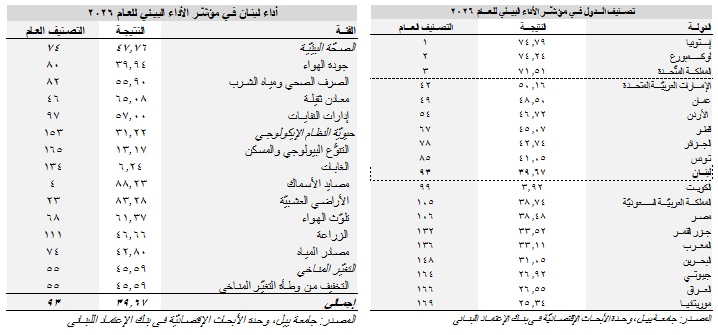
As far as results are concerned, the Global West region achieved the highest median score among all regions included in the index (64.74), followed by Eastern Europe (51.83), Latin America & the Carribean (42.07), Former Soviet States (41.60) and Greater Middle East (40.15), only to name a few. With respect to the countries in the 2026 EPI, Estonia topped the list of rankings with an overall score of 74.79. It is worth noting that a score of 0 implies worst performance while a score of 100 means best performance. Estonia was followed by Luxembourg (score: 74.24) and the United Kingdom (score: 71.51). Regionally, the United Arab Emirates emerged as the best performer in the 2026 EPI with an overall score of 50.16 and a global rank of 42, followed by Oman (score: 48.50; global rank: 49), Jordan (score: 46.72; global rank: 54), and Qatar (score: 45.07; global rank: 67). Lebanon ranked 7th on a regional basis and 93rd in the world, scoring 39.67 in the 2026 Environmental Performance Index, falling just 0.48 points short of the Greater Middle East region’s average. The country’s best performance was at the level of the “fisheries” (score: 88.23; global rank: 4) and “grasslands” (score: 83.28; global rank: 23) sub-indicators, while it performed most poorly in each of the “forests” (score: 6.24; global rank: 134) and the “biodiversity & habitat” (score: 13.17; global rank: 165) fronts.
أصدرت جامعة ييل بالتعاون مع جامعة كولومبيا والمُنتدى الإقتصادي العالمي، تقريرهما المُعَنوَن "مؤشّر الأداء البيئي للعام 2026" الذي يستخدم المقاييس البيئيّة لغَرَض مواكبة تقدُّم الدول على صعيد تحقيق أهداف سياساتها البيئيّة المُشار إليها في أهداف التنمية المُستدامة للأمم المتّحدة. بالتفصيل، يقيِّم مؤشّر الأداء البيئي للعام 2026 أداء 177 دولة في 47 مؤشّر ثانوي (مقارنةّ ب58 مؤشّراً في نسخة العام 2024 وب40 في نسخة العام 2022 وب32 في تقارير سابقة) ينضوون ضمن 12 فئة (مقارنةً ب11 فئة في تقارير سابقة) رئيسيّة تتمحور حول ثلاثة أبعاد أساسيّة للتنمية المُستدامة هي الصحّة بيئيّة (تثقيل بنسبة 25%) وحيويّة النظام الإيكولوجي (تثقيل بنسبة 45%) والتغيّر المناخي (تثقيل بنسبة 30%). وبحسب التقرير، فقد أبرز مؤشّر العام 2026 إمكانات تكنولوجيا الذكاء الاصطناعي في إحداث تحوّل سريع في المقاييس البيئيّة وتتبّع الاستدامة. بالإضافة إلى ذلك، يتبيّن أنّه تمّ إدخال الذكاء الاصطناعي في أكثر من نصف المؤشّرات الثانويّة ال47 المذكورة آنفاً بشكلٍ أو بآخر، ما يتيح فهماً أعمق لحالة كوكب الأرض.
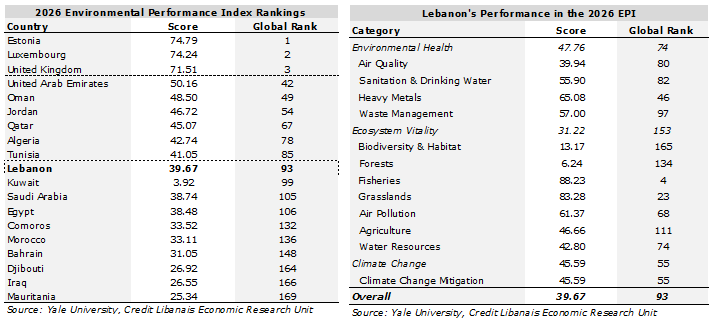
فيما يتعلّق بالنتائج، فقد حقّق الغرب أعلى متوسّط نتيجة بين كافّة المناطق في المؤشّر (64.74)، تبعته أوروبّا الشرقيّة (51.83)، وأميركا اللاتينيّة ومنطقة البحر الكاريبي (42.07) والدول السوفيتيّة السابقة (41.60) ومنطقة الشرق الأوسط الكبرى (40.15) للذكر لا للحصر. أمّا لناحية الدول، فقد تصدّرت إستونيا الترتيب في مؤشّر الأداء البيئي للعام 2026 مُسجِّلةً نتيجة 74.79. تجدر الإشارة إلى أنَّ نتيجة صفر تدلّ على الأداء الأسوأ فيما نتيجة 100 تعني الأداء الأفضل. وقد تَبِعَت إستونيا في الترتيب العالمي كلٌّ من لوكسمبورغ (نتيجة: 74.24) والمملكة المتّحدة (نتيجة: 71.51). إقليميّاً، برزت الإمارات العربيّة المتّحدة كصاحبة الأداء الأفضل في مؤشّر الأداء البيئي للعام 2026 بنتيجة 50.16 وضعتها في المركز ال42 في العالم، تبعتها عمان (النتيجة: 48.50؛ الترتيب العالمي: 49) والأردن (النتيجة: 46.72؛ الترتيب العالمي: 54) وقطر (النتيجة: 45.07؛ الترتيب العالمي: 67). أمّا بالنسبة للبنان، فقد حلَّ هذا الأخير في المركز السابع بين الدول العربيّة مُسجِّلاً نتيجة 39.67 (0.48 نقطة أدنى من متوسّط منطقة الشرق الأوسط الكبرى) في مؤشّر الأداء البيئي للعام 2026 ليحجز بذلك لنفسه المركز ال93 في العالم. وقد سجَّل لبنان أداءه الأفضل على صعيد "مصايد الأسماك" (النتيجة: 88.23؛ الترتيب العالمي: 4) و"الأراضي العشبيّة" (النتيجة: 83.28؛ الترتيب العالمي: 23)، في حين كان أداءه الأسوأ في مجالي "الغابات" (النتيجة: 6.24؛ الترتيب العالمي: 134) و"التنوع البيولوجي والمسكن" (النتيجة: 13.17؛ الترتيب العالمي: 165).