




The Legatum Institute, an independent policy, advisory, and advocacy organization within the Legatum group of companies, released the seventeenth edition of its Prosperity Index report titled “Prosperity Index 2026”, which consists of a gauge of prosperity across 161 countries worldwide based on material wealth and personal wellbeing. More specifically, the Legatum Prosperity Index covers three domains (Development, Society and Freedom) in its assessment of each country which are further divided into ten pillars namely “Standard of Living”, “Health”, “Education”, “Integrity of Families”, “Integrity of Communities”, “Integrity of Society”, “Integrity of State”, “Civil Peace”, “Freedom of Dissent” and “Economic Freedom”. The 2026 edition introduced a new methodology that ranks countries based on their “p-average” rather than the simple arithmetic average. In details, and unlike a simple average, the p-average places greater emphasis on balanced performance across its indicators. As a result, exceptionally strong performance in one area cannot fully compensate for weak performance in another. In other words, countries are rewarded for achieving consistently strong outcomes across multiple dimensions of prosperity, rather than excelling in only a few while lagging significantly in others. Consequently, Scandinavian countries, which dominated the top 4 positions in the 2023 index have not been able to achieve the same results in the 2026 index due to their high tax burden. In addition, the new methodology enabled several Eastern European countries—including Estonia, the Czech Republic, Lithuania, Latvia, and Slovenia—to break into the top 30 rankings for the first time.
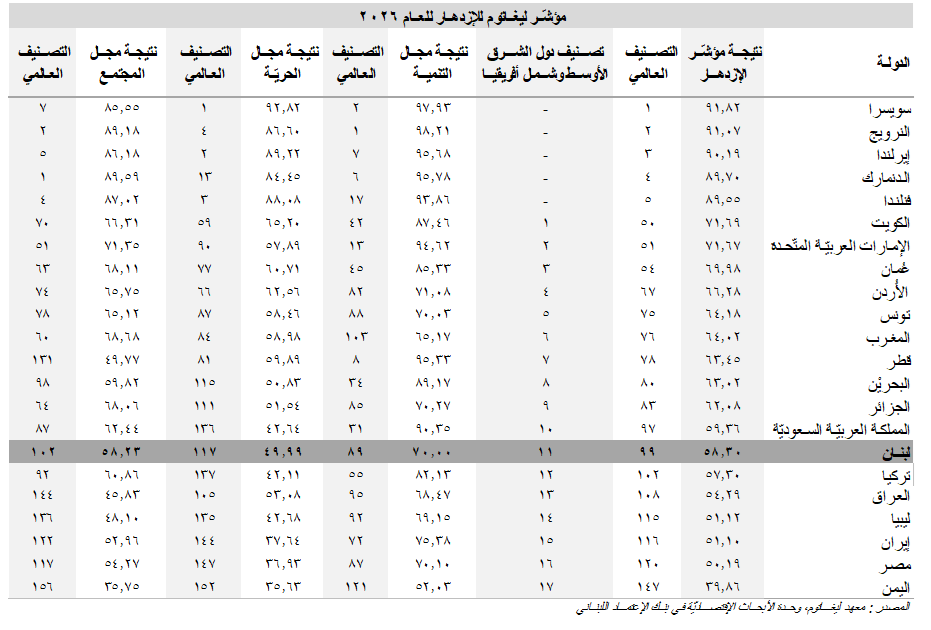
According to the report, Switzerland came in 1st in the world in the 2026 Prosperity Index with a score of 91.82, followed by Norway (score of 91.07), Ireland (score of 90.19), Denmark (score of 89.70) and Finland (score of 89.55). On the regional level, Kuwait came in first and ranked 50th in the world with a score of 71.69, followed by the United Arab Emirates (score: 71.67, world rank: 51st), Oman (score: 69.98, world rank: 54th), Jordan (score: 66.28, world rank: 67th) and Tunisia (score: 64.18, world rank: 75th) among others. On the local front, Lebanon came in 99th in the world and 11th in the MENA region in the Legatum Prosperity Index with a score of 58.30. Specifically, Lebanon scored 70.00 in the development domain (ranking 89th worldwide), 49.99 in the freedom domain (ranking 117th globally) and 58.23 in the society domain (ranking 102nd worldwide).
أصدر معهد ليغاتوم (The Legatum Institute) النسخة السابعة عشرة من مؤشّر الازدهار للعام 2026 ، والذي يشكّل مقياساً للازدهار في 161 دولةٍ حول العالم بحسب الثروة المادّية والرفاهيّة الشخصيّة المتوفّرة في كلٍّ منها. بشكلٍ أكثر تحديدًا، يغطي مؤشر الازدهار الصادر عن معهد ليغاتوم ثلاثة مجالات رئيسيّة في تقييمه لكل دولة، وهي: التنمية، والمجتمع، والحرية، والتي تنقسم بدورها إلى عشرة محاور تتمثل في: "مستوى المعيشة" و"الصحة" و"التعليم" و"تماسك الأسرة" و"تماسك المجتمعات المحليّة" و"تماسك المجتمع" و"نزاهة الدولة" و"السلم الأهلي" و"حرية المعارضة" و"الحرية الاقتصادية". وقد اعتمدت نسخة عام 2026 منهجيّة جديدة تقوم على تصنيف الدول استنادًا إلى ال (P-Average) بدلًا من المتوسّط الحسابي البسيط (Simple Arithmetic Average). بالتفاصيل، يمنح هذا المقياس وزنًا أكبر للأداء المتوازن عبر مختلف المؤشرات، بحيث لا يعود الأداء الاستثنائي في أحد الجوانب كافيًا لتعويض الأداء الضعيف في جانب آخر. بشكل أكثر تفصيلاً، تكافئ المنهجيّة الجديدة الدول التي تحقق نتائج قوية عبر مختلف أبعاد الازدهار، بدلًا من تلك التي تتفوّق في عدد محدود من المجالات مع تسجيلها لأداء متواضع في مجالات أخرى. نتيجةً لذلك، لم تتمكن الدول الإسكندنافيّة والتي هيمنت على المراتب الأربع الأولى في مؤشّر عام 2023 من الحفاظ على النتائج نفسها في نسخة العام 2026 نتيجة ارتفاع العبء الضريبي فيها. كما أتاحت المنهجيّة الجديدة لعدد من دول أوروبا الشرقية، بما فيها إستونيا وجمهورية التشيك وليتوانيا ولاتفيا وسلوفينيا دخول قائمة أفضل 30 دولة في المؤشر للمرة الأولى.
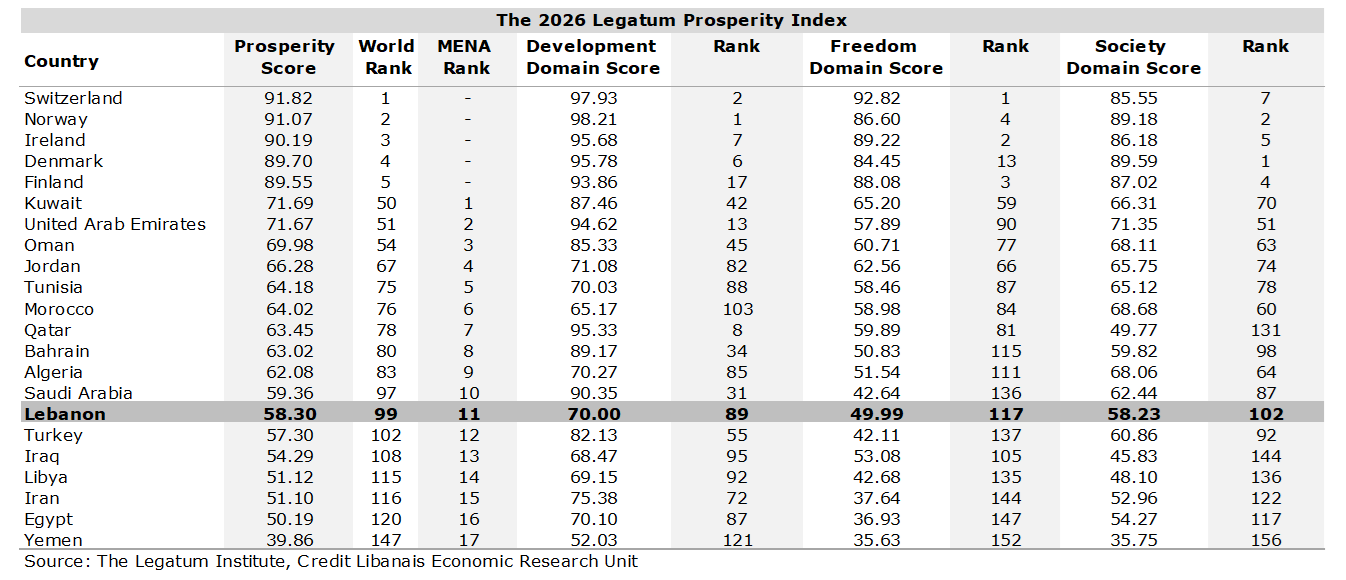
ووفقًا للتقرير، احتلت سويسرا المرتبة الأولى عالميًا في مؤشر الازدهار لعام 2026 محققةً 91.82 نتيجة، تلتها كلّ من النرويج (النتيجة 91.07) وإيرلندا (النتيجة 90.19) والدنمارك (النتيجة 89.70) وفنلندا (النتيجة 89.55). وعلى الصعيد الإقليمي، جاءت الكويت في المرتبة الأولى عربيًا والـ50 عالميًا بنتيجة 71.69، تلتها الإمارات العربيّة المتّحدة (النتيجة 71.67، المرتبة 51 عالميًا) وسلطنة عُمان (النتيجة 69.98، المرتبة 54 عالميًا) والأردن (النتيجة 66.28، المرتبة 67 عالميًا) وتونس (النتيجة 64.18، المرتبة 75 عالميًا). أما على الصعيد المحلّي، فقد حلّ لبنان في المرتبة 99 عالميًا والمرتبة 11 إقليميًا في مؤشّر ليغاتوم للازدهار مسجّلاً نتيجة 58.30. وفي التفاصيل، سجّل لبنان نتيجة 70.00 في مجال التنمية (المركز ال89 في العالم) و49.99 في مجال الحريّة (المركز ال117 في العالم)، و58.23 في مجال المجتمع (المركز ال102 في العالم).