




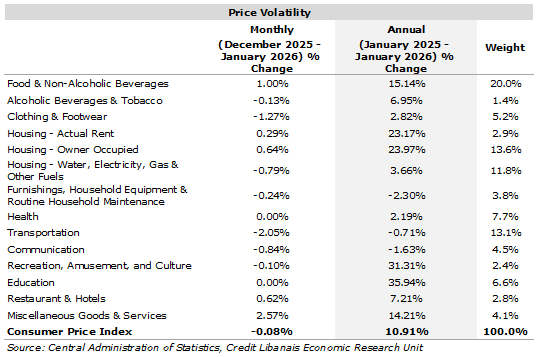
According to the Central Administration of Statistics (CAS), Lebanon’s consumer price index decreased by 0.08% month-on-month in January 2026 compared to a monthly increase of 0.01% in December. On an annual basis, Lebanon’s CPI rallied by 10.91% to 7,917.63 in January 2026, compared to 7,138.95 in January 2025. The decelerating inflation pace since 2023 owes to the widespread dollarization of products & services coupled with the stability of the LBP/USD exchange rate since the month of July 2023. In details, the index portrays a 15.14% y-o-y increase in the prices of food & non-alcoholic beverages (20.0% weight in the index), a 23.97% hike in housing prices (owner occupied; 13.6% weight in the index), some 3.66% rise in the price of housing – water, electricity, gas & other fuels (11.8% weight in the index), not to mention some 2.19% rise in healthcare prices (7.7% weight in the index), and a 35.94% rally in education prices (6.6% weight in the index). It is worth noting clothing & footwear prices (5.2% weight in the index) rose by 2.82% y-o-y in January 2026 and were accompanied by a 7.21% annual hike in restaurants & hotels prices (2.8% weight in the index), and some 31.31% increase in the prices of recreation, amusement and culture (2.4% weight in the index). The cost of transportation (13.1% weight in the index), communication (4.5% weight in the index) and furnishings, household equipment & routine household maintenance (3.8% weight in the index), on the other hand, were the only three components of the CPI to have witnessed annual drops (0.71%, 1.63% and 2.30% respectively) in January. The following section captures the fluctuation in the key constituents of Lebanon’s consumer basket:
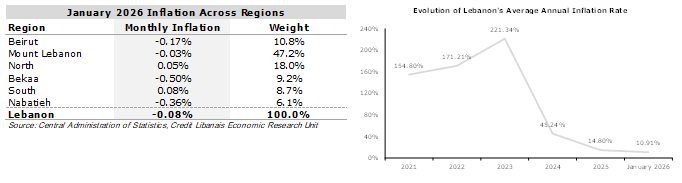
On a geographical basis, all regions across Lebanon (barring the South and the North which saw monthly rises of 0.08% and 0.05% respectively) saw a monthly drop in their CPI values in January 2026, with the sharpest decrease taking place in the Bekaa (0.50%), followed by the Nabatieh (0.36%), Beirut (0.17%) and Mount Lebanon (0.03%) regions.
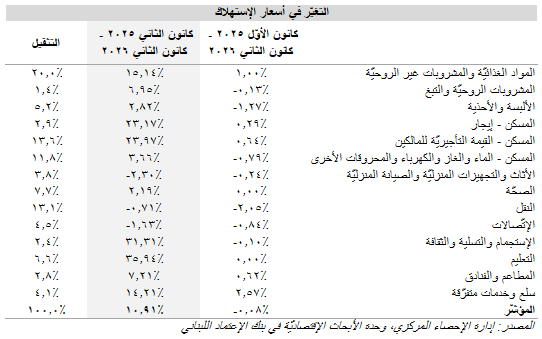
تُظهِر الإحصاءات الصادرة عن إدارة الإحصاء المركزي أنّ مؤشِّر أسعار الإستهلاك في لبنان قد تراجع بنسبة 0.08% خلال شهر كانون الثاني 2026 مقارنةً بزيادة بلغت نسبتها 0.01% في شهر كانون الأوّل. على صعيدٍ سنويٍّ، سَجَّلَ مؤشِّر تضخُّم الأسعار إرتفاع بلغت نسبته 10.91% إلى 7،917.63 في الشهر الأوّل من العام 2026، مقارنةً بمستوى بلغ 7،318.95 في الشهر نفسه من العام 2025. يمكن تعليل التباطؤ الملحوظ في معدّلات التضخّم منذ نهاية العام 2023 بإنتشار دولرة السلع والخدمات وإستقرار سعر صرف الليرة اللبنانيّة مقابل الدولار الأميركي منذ شهر تمّوز 2023. بالتفاصيل، إرتفعت أسعار المواد الغذائيّة والمشروبات غير الروحيّة بنسبة سنويّة بلغت 15.14% (تثقيل بنسبة 20.0%)، رافقها زيادة بنسبة 23.97% في أسعار المسكن (القيمة التأجيريّة للمالكين؛ تثقيل بنسبة 13.6%) وإرتفاع بنسبة 3.66% في أسعار المسكن (الماء والغاز والكهرباء والمحروقات الأخرى) (تثقيل بنسبة 11.8%) وفي كلفة الصحّة بنسبة 2.19% (تثقيل بنسبة 7.7%) وغلاء بنسبة 35.94% في أسعار التعليم (تثقيل بنسبة 6.6%). تجدر الإشارة إلى أنّ أسعار الألبسة والأحذية (تثقيل بنسبة 5.2%) قد إرتفعت بنسبة 2.82% على صعيدٍ سنويٍّ في شهر كانون الثاني 2026 رافقها زيادة في أسعار المطاعم والفنادق بنسبة 7.21% (تثقيل بنسبة 2.8%) وإرتفاع في أسعار الإستجمام والتسلية والثقافة (تثقيل بنسبة 2.4%) بنسبة 31.31%. من جهةٍ أخرى، كانت فِئات النقل (تثقيل بنسبة 13.1%) والإتّصالات (تثقيل بنسبة 4.5%) والأثاث والتجهيزات المنزليّة والصيانة المنزليّة (تثقيل بنسبة 3.8%) المكوّنات الوحيدة التي شهدت تراجعاً سنويّاً في أسعارها في الشهر الأوّل من العام 2026 مسجّلةً إنخفاض بنسبة 0.71% و1.63% و2.30% بالتتالي. تُظهر الفقرة التالية تقلّبات أسعار البنود في مؤشِّر أسعار الإستهلاك:
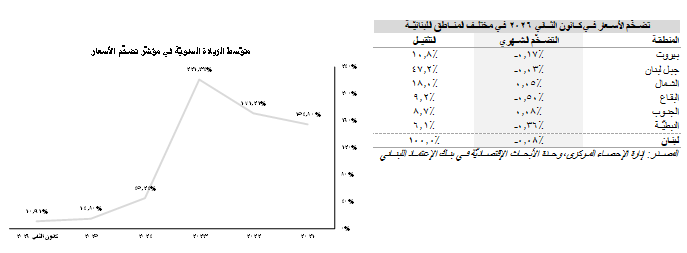
أمّا على صعيدٍ جغرافيٍّ، فقد شهدت كافّة المناطق اللبنانيّة (بإستثناء مناطق الجنوب والشمال التي سجّلت إرتفاعاً شهريّا بنسبة 0.08% و0.05% بالتتالي) إنخفاضاً شهريّاً في مؤشِّر غلاء المعيشة في شهر كانون الثاني 2026 حيث بلغ هذا التراجع نسبته الأعلى في منطقة البقاع (0.50%) تبعتها مناطق النبطيّة (0.36%) وبيروت (0.17%) وجبل لبنان (0.03%).