



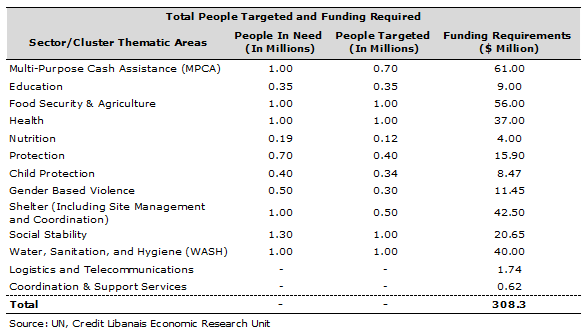
The United Nations announced on March 13, 2026 the launch of a $308.3 million flash appeal to Lebanon. According to the UN Secretary-General Mr. António Guterres, the aid is urgently needed following the military escalation that is taking a terrible toll on Lebanon. Mr. Guterres added that the flash appeal will boost life-saving assistance over the next three months, including food, clean water, health care, education, protection, among other vital services. The Lebanese authorities revealed that within the first week of the escalation of the conflict, 634 people were killed (20% of which were children) and 1,586 were wounded as of March 11. The conflict has resulted in widespread damages to residential buildings, schools, and health facilities. Several collective shelters were opened across Lebanon to host the displaced population, yet the majority of them were at full capacity within the first few days of the crisis. In addition, the UN noted that the current escalation compounds harsh pre-existing humanitarian vulnerabilities. More specifically, the UN revealed that the Lebanon Response Plan had estimated that 3 million people in Lebanon already needed assistance (including refugees and vulnerable Lebanese communities) due to the conflicts, socioeconomic vulnerability, water scarcity, only to name a few. Furthermore, some 961,000 people were suffering from acute food insecurity while health, water, and social protection systems were already operating under severe pressure. On the humanitarian needs front, the UN stated that the current escalation is leading to growing humanitarian needs across several sectors that are affecting the displaced populations, the communities that are still in conflict-affected areas, and host communities that are welcoming large numbers of displaced people. According to the UN’s humanitarian partners, some 1.3 million people in Lebanon may be directly affected by the crisis in the next three coming months including displaced households and other vulnerable communities, 20% of which are expected to be accommodated in collective shelters. The $308.3 million aid will be mainly geared towards the areas of Multi-Purpose Cash Assistance (MPCA; $61.00 million), food security and agriculture ($56.00 million), shelter ($42.50 million), Water, Sanitation, and Hygiene (WASH; $40.00 million), health ($37.00 million), only to name a few. Delving into details, the MPCA offers “unrestricted and unconditional cash transfers” to allow households to meet their needs in alignment with global practices and will be implemented in coordination with the Ministry of Social Affairs (MoSA) to continue conforming to national social protection objectives. Concerning food security and agriculture, the UN noted that the key needs across population groups include prompt access to life-saving food assistance to displaced households, food parcels & ready-to-eat meals to displaced people, emergency agricultural assistance, among others. Regarding shelters, the UN revealed that the main needs encompass inclusive access to proper and safe collective shelters for displaced families, repairs and upgrades of collective sites to conform to the minimum humanitarian standards, and shelter support to displaced households, among others. As for WASH, the UN stated that its’ priority needs encompass repairing and maintaining damaged water and sanitation infrastructure, providing emergency water services, and ensuring access to emergency sanitation facilities. Concerning health, the UN commented that the urgent health needs include emergency trauma care for injured individuals, access to primary healthcare services in displacement areas, availability of essential medications and treatments for chronic diseases, only to name a few.
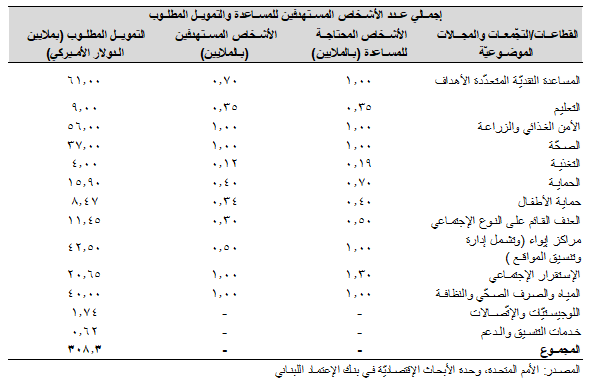
أعلنت الأمم المتّحدة بتاريخ 13 آذار 2026 عن إطلاق نداء عاجل بقيمة 308.3 مليون د.أ. للبنان. وبحسب الأمين العامّ للأمم المتّحدة السيّد أنطونيو غوتيريس، فإنّ المساعدة ملحّة بُعيدَ الحرب الأخيرة التي طالت معظم المناطق اللبنانيّة. وقد أضاف السيّد غوتيريس أنّ النداء العاجل سوف يعزّز المساعدات المنقذة للحياة على فترة الثلاثة أشهر القادمة وهي تشمل الغذاء والمياه النظيفة والرعاية الصحيّة والتعليم والحماية وغيرها من الخدمات الحيويّة. وقد كشفت السلطات اللبنانيّة أنّه في غضون الأسبوع الأوّل من تصعيد النزاع، بلغ عدد الضحايا 634 شخصاً (20% منهم أطفال) في حين بلغ عدد الإصابات 1،586 كما في 11 آذار. وقد تسبّب النزاع بدمار كبير في المباني السكنيّة والمدارس والمرافق الصحيّة. وقد تمّ فتح عدد كبير من مراكز إيواء جماعيّة في عدّة مناطق لبنانيّة لإستيعاب السكّان النازحين إلاّ أنّ معظمها قد وصلت إلى سعتها الكاملة في الأيّام الأولى من الأزمة. بالإضافة إلى ذلك، أشارت الأمم المتّحدة أنّ التصاعد الأخير يزيد من حدّة الأوضاع الإنسانيّة الصعبة أصلاً. بالتفاصيل، كشفت الأمم المتّحدة أنّ خطّة إستجابة لبنان (Lebanon Response Plan) كانت قد قدّرت أنّ 3 مليون شخص في لبنان قبل تفاقم النزاع هم في الأصل بحاجة للمساعدات (بما فيهما اللاجئين والمجتمعات اللبنانيّة المعرّضة) نتيجة النزاعات والضعف الإجتماعي والإقتصادي والشحّ في المياه وغيرها من الأسباب. بالإضافة إلى ذلك، فإنّ حوالي ال961،000 شخص كانوا يعانونمن إنعدام حادّ في الأمن الغذائي قبل التصعيد الأخير في حين أنّ أنظمة الصحّة والمياه والحماية الإجتماعيّة كانت تعمل تحت ضغطٍ كبير. أمّا على صعيد الإحتياجات الإنسانيّة، أشارت الأمم المتّحدة أنّ التصعيد الأخير يزيد من الإحتياجات الإنسانيّة في عدّة قطاعات ما يؤثّر على السكّان النازحين والمجتمعات التي لا تزال متواجدة في مناطق معرّضة للنزاع والمجتمعات المضيفة التي تستقبل عدد كبير من اللاجئين. وبحسب شركاء الأمم المتّحدة الإنسانيّين، فإنّ حوالي ال1.3 مليون شخص في لبنان قد يتأثّروا من الأزمة بشكل مباشر في الأشهر الثلاثة المقبلة ومنهم الأسر النازحة ومجتمعات أخرى معرّضة 20% منهم من المتوقّع أن يلجؤا إلى مراكز إيواء جماعيّة. وسيتم تخصيص مبلغ ال308.3 مليون دولار بشكل أساسي على مجالات المساعدة النقديّة المتعدّدة الأهداف (61.00 مليون د.أ.) والأمن الغذائي والزراعة (56.00 مليون د.أ.) ومراكز الإيواء (42.50 مليون د.أ.) والمياه والصرف الصحّي والنظافة (40.00 مليون د.أ.) والصحّة (37.00 مليون د.أ.) للذكر لا الحصر. بالتفاصيل، فإنّ المساعدة النقديّة المتعدّدة الأهداف ستؤمّن تحاويل نقديّة غير محدودة وغير مشروطة للسماح للأسر بتلبية إحتياجاتهم بما يتطابق مع المعايير الدوليّة وسيتمّ تطبيق تلك المساعدات بالتعاون مع وزارة الشؤون الإجتماعيّة تماشياً مع أهداف الحماية الإجتماعيّة الوطنيّة. أمّا لجهة الأمن الغذائي والزراعة، أشارت الأمم المتّحدة أنّ الإحتياجات الرئيسيّة عبر مختلف الفئات السكانيّة تشمل التأمين الفوري للمساعدات الغذائيّة المنقذة للحياة للأسر النازحة وطرود غذائيّة ووجبات جاهزة للإستهلاك للأشخاص النازحة ومساعدات زراعيّة طارئة وغيرها. بالنسبة للإيواء، كشفت الأمم المتّحدة أنّ الإحتياجات الأساسيّة تشمل ولوج شامل لمراكز إيواء جماعيّة مناسبة وآمنة للأسر النازحة وتصليح وتطوير مراكز الإيواء الجماعيّة لتتطابق مع المعايير الإنسانيّة ودعم مراكز الإيواء للأسر النازحة للذكر لا الحصر. أمّا لناحية المياه والصرف الصحّي والنظافة، أشارت الأمم المتّحدة أنّ الإحتياجات المهمّة تشمل تصليح وصيانة البنى التحتيّة للمياه والصرف الصحّي كما وتأمين خدمات مياه طارئة والتأكّد من تأمين الولوج لمراكز الصرف الصحّي الطارئة وغيرها. أمّا لجهة الصحّة، علّقت الأمم المتّحدة أنّ إحتياجات الصحّة الطارئة تشمل مراكز رعاية الصدمات الطارئة (Emergency Trauma Care) للأشخاص المصابين والولوج لخدمات الرعاية الأوليّة في مراكز النزوح وتوفّر الأدوية الأساسيّة وعلاجات الأمراض المزمنة للذكر لا الحصر.