




The United Nations Sustainable Development Solutions Network, in partnership with Gallup and Oxford’s Wellbeing Research Center, recently released the 14h edition of the “World Happiness Report” (WHR) presenting a landmark survey of the state of happiness across 147 countries. The main purpose of the report is to examine the happiness of people at different stages of life. More specifically, the report divides the sample population according to three categories namely those aged between 15 and 19, those aged between 20 and 24, and those older than 24. In detail, the report calculates its rankings using data compiled by the ‘Gallup World Poll’, which is based on the responses of surveyed individuals (assigning scores between 0 (worst) and 10 (best)) to central life evaluation questions structured in surveys conducted over a three-year period. Moreover, national average life evaluation rankings in the 2026 WHR are accompanied by the citation of six major variables namely, income, social support, healthy life expectancy, freedom, generosity, and perceptions of corruption, that contribute to explaining and understanding the attained national average scores.
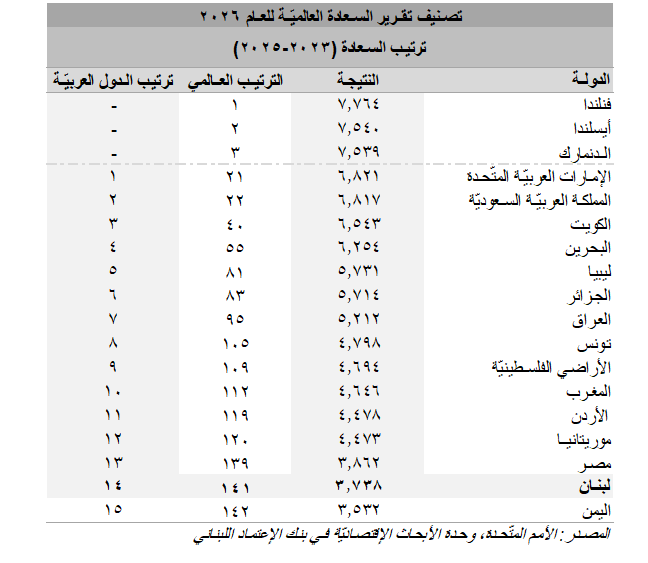
With respect to the results of the report, and on a global level, Nordic countries fared best with Finland topping the World Happiness list over the 2023-2025 period, scoring 7.764 followed by Iceland (score: 7.540) and Denmark (score: 7.539).
Regionally, the United Arab Emirates led the list of Arab countries over the 2023-2025 period with a World Happiness score of 6.821, ranking 21st in the world followed by Saudi Arabia (global rank: 22; score: 6.817), Kuwait (global rank: 40; score: 6.543) and Bahrain (global rank: 55; score: 6.254).
Locally, Lebanon ranked second to last amongst Arab countries and 141st globally in the 2026 World Happiness Report with a score of 3.738, yet registered a significant improvement compared to the 3.188 score registered in the previous edition.
أصدرت شبكة حلول التنمية المستدامة التابعة للأمم المتحدة (The United Nations Sustainable Development Solutions Network)، بالتعاون مع غالوب ومركز أوكسفورد لأبحاث الرفاهيّة (Oxford’s Wellbeing Research Center)، النسخة الرابعة عشر من "تقرير السعادة العالميّة"الذي يُقدِّم مسحاً إستقصائيّاً لحالة السعادة في 147 دولة. ويهدف التقرير بشكلٍ رئيسيٍّ إلى معاينة سعادة الأفراد بحسب شريحة العمر. بالتفصيل، يقسّم التقرير أفراد المجتمع إلى ثلاث فئات أعمار ألا وهي الأعمار ما بين ال15 وال19 والأعمار ما بين ال20 وال24 والأعمار التي تفوق ال24. يقوم التقرير بتحديد المراتب بالإستناد إلى معلومات مُستقاة من ’إستفتاء مؤسّسة غالوب العالمي‘ (‘Gallup World Poll’) الذي يعتمد على إيجابات الأفراد (عبر إعطاء تصنيف يتراوح بين صفر (الأسوأ) و 10 (الأفضل)) على مجموعة أسئلة تتمحور حول تقييم أبرز مقوِّمات الحياة ضمن دراسات إستقصائيّة عن فترة ثلاثة أعوام. بالإضافة، وإلى جانب ترتيب المتوسّطات الوطنيّة لتقييم الحياة في تقرير السعادة العالميّة للعام 2026، يأتي التقرير على ذِكِر ستّة عوامل رئيسيّة وهي الدخل، الدعم الإجتماعي، أمد الحياة الصحيّة المُتوَقَّع، الحريّة، الكَرَم، والنظرة إلى الفساد، في محاولةٍ لتفسير وفهم النتائج التي توصَّل إليها.
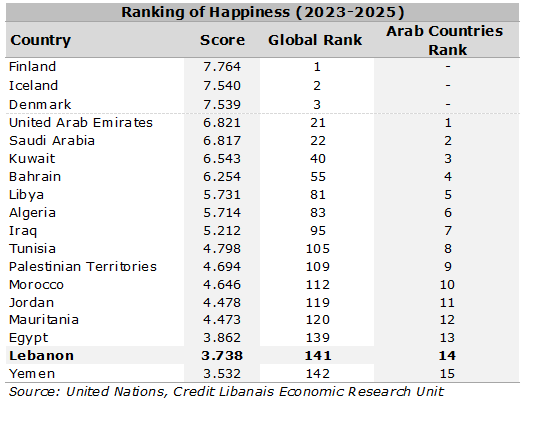
أمّا بالنسبة لنتائج التقرير، وعلى صعيدٍ عالميٍّ، فقد سجّلت الدول الاسكندنافية الأداء الأفضل بحيث تصدّرت فنلندا قائمة الدول من حيث مستوى السعادة خلال الفترة المُمتدّة بين عامي 2023 و2025 مع تسجيلها نتيجة 7.764 تبعتها كلٌّ من أيسلندا و الدنمارك بنتيجة 7.540 ونتيجة 7.539 بالتتالي.
إقليميّاً، تفوّقت الإمارات العربيّة المتّحدة على الدول العربيّة لجهة مستوى السعادة لدى السكّان المستطلعين بين عامي 2023 و2025 بنتيجة 6.821 محتلّةً المركز ال21 عالميّاً متبوعةً من السعوديّة (الترتيب العالمي: 22؛ النتيجة: 6.817) والكويت (الترتيب العالمي: 40؛ النتيجة: 6.543) والبحرين (الترتيب العالمي: 55؛ النتيجة: 6.254).
محلّياً، حلّ لبنان في المرتبة ما قبل الأخيرة عربيّاً وال141 في العالم في تقرير السعادة العالميّة بنتيجة 3.738 مسجّلا بعض التحسّن مقارنةً بنتيجة 3.188 في النسخة السابقة.