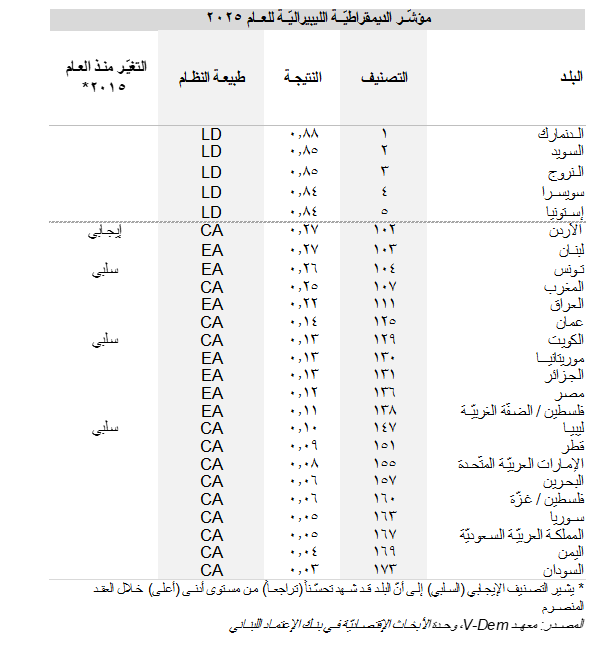





The Varieties of Democracy (V-Dem) Institute, an independent research institute funded by a number of government organizations, the World Bank and several research institutions, recently issued the Democracy Report 2026 which attempts to gauge democracy levels across countries. In details, the report is based on version 16 of the V-Dem dataset, which relies on assessments by some 4,200 experts from 202 countries to generate some 32 million data points. The report ranks countries according to their scores in the Liberal Democracy Index (LDI), which is based on the dataset, in addition to classifying countries within four regime types, namely Liberal Democracy (LD), Electoral Democracy (ED), Electoral Autocracy (EA) and Closed Autocracy (CA). In a Liberal Democracy regime, civil liberties are protected, while there are satisfactory levels of freedom of expression in an Electoral Democracy regime. In an Electoral Autocracy regime, there are insufficient levels of essential requisites of freedom of expression while in a Closed Autocracy regime, freedom of expression does not exist and there are no fair elections. The report noted that democracy levels have continued their downturn, reaching levels recorded during the year 1978 with the level of democracy for the average citizen in Western Europe and North America reaching a 50-year low. According to the report, the percentage of the world’s population living in autocratizing countries has surpassed that of those living in democratizing countries for more than 17 consecutive years. In figures, the report uncovered that 74% of the world’s population (around 6.0 billion individuals) lived in autocracies in 2025 compared to 50% a decade earlier while the remaining 26% reside in liberal and electoral democracies. The report also revealed that the number of countries in ongoing episodes of democratization dropped from 27 in 2005 to 18 in 2025, while the number of countries in constant episodes of autocratization rose from 12 to 44 during the same periods. The report also unveiled that 44 countries experienced sizeable deteriorations in freedoms of expression during the year 2025, while only eleven recorded some improvement in their democracy levels.
As far as results are concerned, Denmark topped the list with a score of 0.88 falling under the LD regime, followed by Sweden (0.85, “LD”) and Norway (0.85, “LD”). As far as Arab countries are concerned, Jordan came in first (ranking 102nd globally) with a score of 0.27 in the LDI and a regime type classified as “CA”, followed very closely by Lebanon (score of 0.27, 103rd international rank, regime type “EA”) and Tunisia (score of 0.26, 104th international rank, regime type “EA”). Lebanon made a major annual leap in terms of performance, bearing in mind that it registered a 0.21 score in 2024 (6th rank regionally and 114th globally and a regime type classified as “EA”), mainly on the back of the election of a new president after two years of “turbulence”.
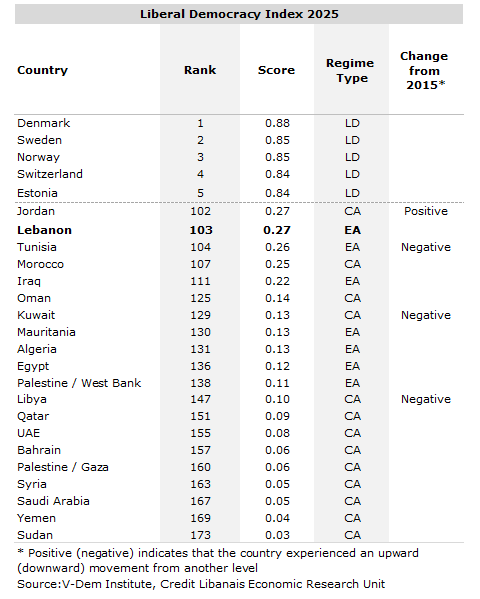
نشر معهد V-Dem (وهو معهد أبحاث مستقل مموّل من قبل مؤسّسات حكوميّة والبنك الدولي ومؤسّسات أبحاث عدّة) تقرير الديمقراطيّة للعام 2026 والذي يقيس مستوى الديمقراطيّة في عدد كبير من الدول حول العالم. بالتفاصيل، يعتمد التقرير على النسخة رقم 16 من مجموعة بيانات V-Dem والتي تستند على تقييمات أجراها حوالي 4،200 خبير موزّعين على 202 بلداً لإنتاج حوالي ال32 مليون نقطة بيان. على ذلك، فإنّ التقرير يصنّف البلاد بحسب أدائها في مؤشّر الديمقراطيّة الليبيراليّة الذي يعتمد على مجموعة البيانات كما ويصنّف البلاد ضمن أربعة أنظمة ألا وهي الديمقراطيّة الليبيراليّة (LD) والديمقراطيّة الإقتراعية (ED) والأوتوقراطيّة الإقتراعيّة (EA) والأوتوقراطيّة المغلقة (CA). في نظام الديمقراطيّة الليبيراليّة، يتمّ حماية الحريّات المدنيّة، في حين أنّ نظام الديمقراطيّة الإقتراعيّة يتمتّع بمستويات مقبولة من حريّة التعبير. أمّا في نظام الأوتوقراطيّة الإقتراعيّة، فلا يوجد مستويات كافية من متطلّبات حريّة التعبير في حين أنّه في نظام الأوتوقراطيّة المغلقة، فتلك الأنظمة تفتقر إلى مبدأ حريّة التعبير وإنتخابات عادلة. وقد لحظ التقرير بأنّ مستويات الديمقراطيّة آخذة بالتراجع بحيث بلغت في العام 2025 المستويات التي كانت عليها في العام 1978 مع بلوغ متوسّط الديمقراطيّة للمواطن في أوروبا الغربيّة وشمال أميركا أدنى مستوى لها منذ 50 عام. وبحسب التقرير، فإنّ نسبة السكّان الذين يعيشون في بلدان أوتوقراطيّة أعلى من نسبة الذين يعيشون في بلدان ديمقراطيّة منذ أكثر من 17 سنة على التوالي. بالأرقام، فقد كشف التقرير أنّ 74% من سكّان العالم (حوالي 6.0 مليار شخصاً) يعيشون في بلدان أوتوقراطيّة مقارنةً بنسبة 50% قبل فترة عشر سنوات، في حين أنّ 26% منهم يعيشون في بلدان ليبيراليّة وإقتراعيّة. وقد أشار التقرير أيضاً إلى أنّ عدد البلدان الديمقراطيّة قد تراجع من 27 في العام 2005 إلى 18 في العام 2025، في حين أنّ عدد البلدان الأوتوقراطيّة قد زاد من 12 إلى 44 خلال الفترة نفسها. وقد أفاد التقرير أيضاً بأنّ 44 دولةً قد شهدت تدهور كبير في مستوى حريّة التعبير خلال العام 2025 مع العلم أنّ 11 بلد فقط قد شهد تحسّناً في مستويات الديمقراطيّة فيها.
أمّا على صعيد النتائج، فقد إحتلّت الدنمارك المرتبة الأولى في مؤشّر الديمقراطيّة الليبيراليّة للعام 2025 بنتيجة 0.88 وطبيعة نظام (LD) تبعتها السويد (0.85، LD) والنروج (0.85، LD). أمّا بالنسبة للدول العربيّة، فقد أتى الأردن في المرتبة الأولى (المركز 102 عالميّاً) بنتيجة 0.27 في مؤشّر الديمقراطيّة الليبيراليّة وبطبيعة نظام CA تبعه لبنان (نتيجة 0.27، المرتبة 103 دوليّاً، طبيعة نظام EA) وتونس (نتيجة 0.26، المرتبة 104 دوليّاً، طبيعة نظام EA). وقد حقّق لبنان قفزة سنويّة كبيرة من حيث الأداء، مع الأخذ في الاعتبار أنه سجل نتيجة 0.21 في عام 2024 (المركز السادس إقليمياً والمركز 114 عالمياً ونظام مصنف على أنه "EA")، وهو ما عزاه التقرير إلى إنتخاب رئيس جديد بعد عامين من الإضطرابات.