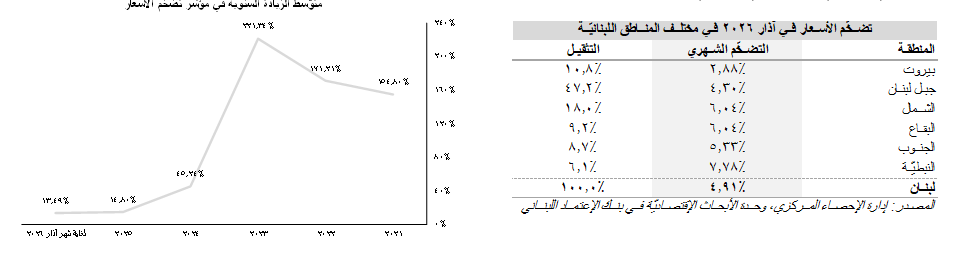





The economic fallout from the regional conflict and the closure of the Strait of Hormuz triggered a frantic rally in oil prices, creating a significant pass-through effect, driving up costs across oil-dependent sectors. In details, and according to the Central Administration of Statistics (CAS), Lebanon’s consumer price index increased by 4.91% month-on-month in March 2026 (highest monthly increase since the month of October 2023) compared to a monthly increase of 1.90% in February. On an annual basis, Lebanon’s CPI rallied by 17.26% to 8,464.31 in March 2026, compared to 7,218.28 in March 2025, with the average annual inflation rate for the first three months of the year 2026 attaining 13.49%. The decelerating inflation pace since 2023 owes to the widespread dollarization of products & services coupled with the stability of the LBP/USD exchange rate since the month of July 2023. In details, the index portrays a 19.41% y-o-y increase in the prices of food & non-alcoholic beverages (20.0% weight in the index), an 18.61% hike in housing prices (owner occupied; 13.6% weight in the index), a 24.81% rise in transportation prices (13.1% weight in the index) owing to the aforementioned increase in oil prices, some 22.16% rise in the price of housing – water, electricity, gas & other fuels (11.8% weight in the index), not to mention some 2.15% rise in healthcare prices (7.7% weight in the index), and a 35.67% rally in education prices (6.6% weight in the index). It is worth noting clothing & footwear prices (5.2% weight in the index) rose by 2.39% y-o-y in March 2026 and were accompanied by an 11.34% annual hike in restaurants & hotels prices (2.8% weight in the index), and some 42.66% increase in the prices of recreation, amusement and culture (2.4% weight in the index). Communication (4.5% weight in the index), on the other hand, was the only component of the CPI to have witnessed an annual drop (1.63%) in prices in March. The following section captures the fluctuation in the key constituents of Lebanon’s consumer basket:
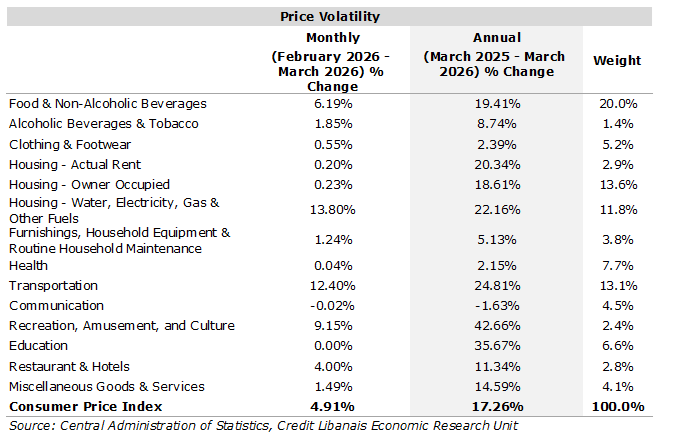
On a geographical basis, all regions across Lebanon saw a monthly rise in their CPI values in March 2026, with the sharpest increase taking place in Nabatieh (7.78%) followed by the Bekaa & the North (6.04%) and the South (5.33%), the Mount Lebanon (4.30%), and Beirut (2.88%) regions.
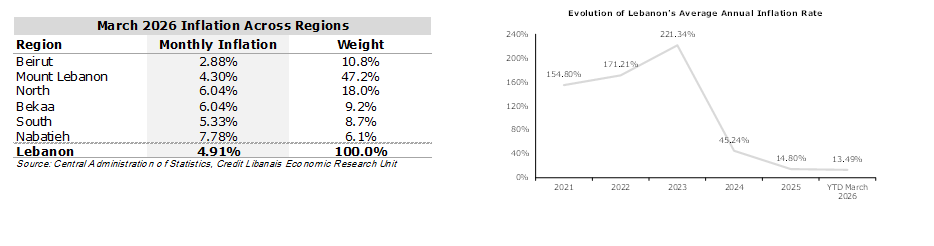
أدّت التداعيات الإقتصاديّة الناجمة عن الصراع الإقليمي وإغلاق مضيق هرمز إلى ارتفاع كبير في أسعار النفط، مما أحدث تأثيراً إنتقالياً كبيراً (pass-through effect) أدى بدوره إلى رفع التكاليف في جميع القطاعات المعتمدة على النفط. بالتفاصيل، تُظهِر الإحصاءات الصادرة عن إدارة الإحصاء المركزي أنّ مؤشِّر أسعار الإستهلاك في لبنان قد زاد بنسبة 4.91% خلال شهر آذار 2026 (أعلى زيادة شهريّة منذ شهر تشرين الأول 2023) مقارنةً بإرتفاع بلغت نسبته 1.90% في شهر شباط. على صعيدٍ سنويٍّ، سَجَّلَ مؤشِّر تضخُّم الأسعار إرتفاع بلغت نسبته 17.26% إلى 8،464.31 في الشهر الثالث من العام 2026، مقارنةً بمستوى بلغ 7،218.28 في الشهر نفسه من العام 2025. وقد بلغ متوسّط الزيادة السنويّة في مؤشّر تضخّم الأسعار 13.49% خلال الفصل الأوّل من العام 2026. يمكن تعليل التباطؤ الملحوظ في معدّلات التضخّم منذ نهاية العام 2023 بإنتشار دولرة السلع والخدمات وإستقرار سعر صرف الليرة اللبنانيّة مقابل الدولار الأميركي منذ شهر تمّوز 2023. بالتفاصيل، إرتفعت أسعار المواد الغذائيّة والمشروبات غير الروحيّة بنسبة سنويّة بلغت 19.41% (تثقيل بنسبة 20.0%)، رافقها زيادة بنسبة 18.61% في أسعار المسكن (القيمة التأجيريّة للمالكين؛ تثقيل بنسبة 13.6%) وإرتفاع بنسبة 24.81% في أسعار النقل (تثقيل بنسبة 13.1%) نتيجة إرتفاع أسعار النفط المذكور آنفاً، وزيادة بنسبة 22.16% في أسعار المسكن (الماء والغاز والكهرباء والمحروقات الأخرى) (تثقيل بنسبة 11.8%) وفي كلفة الصحّة بنسبة 2.15% (تثقيل بنسبة 7.7%) وغلاء بنسبة 35.67% في أسعار التعليم (تثقيل بنسبة 6.6%). تجدر الإشارة إلى أنّ أسعار الألبسة والأحذية (تثقيل بنسبة 5.2%) قد إرتفعت بنسبة 2.39% على صعيدٍ سنويٍّ في شهر آذار 2026 رافقها زيادة في أسعار المطاعم والفنادق بنسبة 11.34% (تثقيل بنسبة 2.8%) وإرتفاع في أسعار الإستجمام والتسلية والثقافة (تثقيل بنسبة 2.4%) بنسبة 42.66%. من جهةٍ أخرى، كانت فئة الإتّصالات (تثقيل بنسبة 4.5%) المكوّن الوحيد الذي شهد تراجعاً سنويّاً في الأسعار في الشهر الثالث من العام 2026 حيث إنخفضت أسعار الإتّصالات بنسبة سنويّة قدرها 1.63% عن مستوياتها المسجّلة في آذار 2025. تُظهر الفقرة التالية تقلّبات أسعار البنود في مؤشِّر أسعار الإستهلاك:
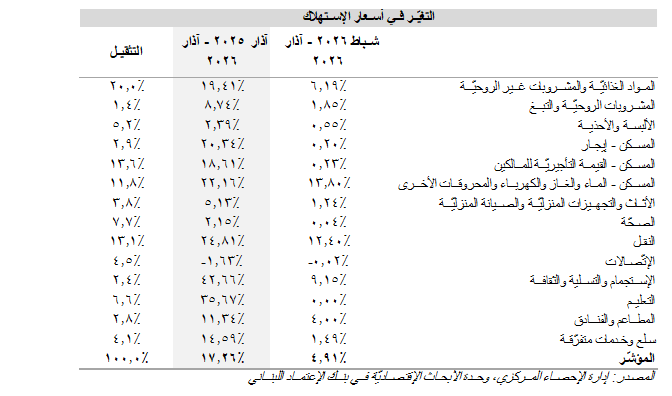
أمّا على صعيدٍ جغرافيٍّ، فقد شهدت كافّة المناطق اللبنانيّة إرتفاعاً شهريّاً في مؤشِّر غلاء المعيشة في شهر آذار 2026 حيث بلغت هذه الزيادة نسبتها الأعلى في منطقة النبطيّة (7.78%) تبعتها منطقتيّ البقاع والشمال (6.04% لكلّ منها) ومناطق الجنوب (5.33%) وجبل لبنان (4.30%) وبيروت (2.88%).