



260617083550314~.jpg)
The United Nations (UN) announced on June 5, 2026 the launch of a $331.5 million extended flash appeal to Lebanon. Said flash appeal serves as an extension to the $308.3 million flash appeal that was launched on March 13, thereby bringing the total funding requirements to around $639.9 million. The original flash appeal covered the March-May 2026 period, while the newer flash appeal is meant to cover the June-August period. According to the UN, its humanitarian partners are seeking to extend their multi-sector assistance to reach 1.4 million vulnerable individuals in need (up from around 1.3 million earlier) while the targeted individuals will also be 1.4 million individuals (up from around 1.0 million before). The UN noted that the additional funding requirement reflects the widening scope and urgency of needs, namely continued assistance, newly identified needs, and new emerging activities that resulted from the evolving crisis. Furthermore, the UN revealed that as of May 31, some $185.9 million has been received out of the $639.9 million funding requirements. The UN also mentioned that as of May 2026, around 1 million individuals remained displaced, with over 135,000 individuals taking refuge in 635 collective shelters while hundreds of thousands of other individuals remain outside shelters with host families and in informal sites. In a related note, the UN stated that prospects for a safe return are still limited amid security concerns, damaged housing, and destroyed public infrastructure, only to name a few.
According to the Lebanese Ministry of Public Health, the number of casualties and injuries from the war are still on the rise, with the Ministry revealing that between March 2 and June 1, over 3,433 individuals were killed and more than 10,395 individuals were injured. The UN noted that since the beginning of the escalation on March 2, the flash appeal has identified major risks to healthcare, water systems, schools, and municipal services. More specifically, between March 2 and May 31, 190 incidents have been recorded, resulting in 128 deaths and 332 injuries among health care professionals. The UN added that the aforementioned attacks on Lebanese territories have targeted health workers, ambulances, medical facilities, and supply chains, thereby weakening the already frail healthcare infrastructure. In a related note, the UN commented that healthcare unaffordability is becoming a major concern for individuals affected by the escalation, with the findings of a preliminary rapid health assessment conducted in May revealing that in 15 of 26 districts across Lebanon, 60-80% of households could not afford health services, namely medications and hospitalization. The UN also stated that the latest version of the IPC report revealed that circa 1.24 million individuals (i.e. nearly one in four individuals analyzed) are expected to suffer from “emergency levels” of acute food insecurity (IPC Phase 3+) between April and August 2026, noting that around 23% of agricultural areas have been damaged, destroyed, or have become inaccessible, while up to 78% of farmers reported that they are unable to access their farming land.
Strategy-wise, the UN noted that the logic, objectives, and overall response framework of the original 2026 flash appeal remain unchanged, while the extension of the flash appeal introduces adjustments to planning figures, activity packages, and financial requirements where needed and required in their operating environment. The UN revealed that there are three strategic objectives, the first centering around providing timely, life-saving, multi-sectoral assistance to decrease mortality, morbidity, and suffering among individuals affected by the renewed hostilities. More specifically, the UN mentioned that direct assistance will include emergency multi-purpose cash as well as access to essential services across shelter, food security, and health, only to name a few. The second strategic objective revolves around preventing, mitigating, and responding to the physical harm of civilians and civilian infrastructure by improving protection monitoring & analysis. The second objective also promotes strengthening communication and engagement with affected communities to ameliorate the access to accurate and timely information on humanitarian assistance. The third strategic objective’s purpose is to assist in the delivery of essential services (namely municipal water & sanitation, waste management, as well as emergency energy support) to allow for safe, timely, and effective humanitarian operations in areas affected by the escalation of hostilities. As per the UN, the extended flash appeal has introduced and expanded specific activities depending on the new requirements. More specifically, the extended flash appeal will establish & operate teaching and learning hubs in close proximity to active collective shelters, expand complimentary feeding kits, and will keep on providing lifesaving food assistance in and out of shelters, only to name a few.
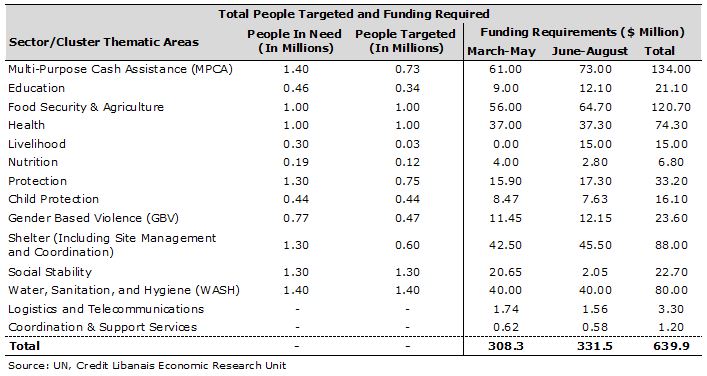
Regarding the funding requirements, the $639.9 million aid will be mainly geared towards the areas of Multi-Purpose Cash Assistance (MPCA; $134.00 million), food security and agriculture ($120.70 million), shelter ($88.00 million), Water, Sanitation, and Hygiene (WASH; $80.00 million), health ($74.30 million), only to name a few. Delving into details, the MPCA will mainly target individuals affected by the conflict who are residing outside collective shelters (including hard-to-reach areas with functional markets) in coordination with the Ministry of Social Affairs (MoSA) to continue conforming to national social protection objectives.
Concerning food security and agriculture, the UN noted that food assistance inside collective shelters will be in the form of hot meals and ready-to-eat assistance. In addition, the UN stated that arrangements will be made in coordination with the “Health” and “WASH” areas to provide assistance for communal kitchens and safe self-cooking arrangements including proper cooking capacity, and safe food handling. Regarding shelters, the UN revealed that shelters will no longer be used for temporary accommodation but rather for prolonged displacement arrangements. In addition, the UN noted that individuals living outside shelters are suffering from rising rents, decreasing income, and depleted savings, which are limiting families’ abilities to preserve private accommodation. Inside collective shelters, however, a larger number of shelter sites are expected to remain in operation for longer than initially expected, thereby necessitating repairs and minimal standards. As for WASH, the UN stated that its’ priority needs encompass repairing and maintaining damaged water and sanitation infrastructure, providing emergency water services, and ensuring access to emergency sanitation facilities. Outside the shelters, the main concern is no longer just immediate household support, but also the continuity of water services in affected areas. Concerning health, the UN commented that the urgent health needs include emergency trauma care for injured individuals, access to primary healthcare services in displacement areas, availability of essential medications and treatments for chronic diseases, only to name a few.
أعلنت الأمم المتّحدة بتاريخ 5 حزيران 2026 عن إطلاق نداء عاجل موسّع بقيمة 331.5 مليون د.أ. للبنان. ويأتي هذا النداء الموسّع كتمديد للنداء العاجل السابق والتي بلغت قيمته 308.3 مليون د.أ. والذي تمّ إطلاقه في 13 آذار، ما يرفع المجموع بين الندائين إلى 639.9 مليون د.أ. وقد شمل النداء العاجل الأساسي الفترة الممتدّة بين شهريّ آذار وأيّار 2026 في حين أنّ النداء العاجل الموسّع سوف يغطّي الفترة الممتدّة بين شهريّ حزيران وآب. وبحسب التقرير، فإنّ شركاء الأمم المتّحدة الإنسانيّين يسعون إلى تمديد مساعداتهم على مختلف القطاعات لتطال حوالي 1.4 مليون شخص مهمّش بحاجة للمساعدة (من حوالي 1.3 مليون شخص في السابق) في حين أنّ عدد الأشخاص المستهدفين هو 1.4 مليون شخص (من حوالي مليون شخص في السابق). وقد أشارت الأمم المتّحدة إلى أنّ متطلّبات التمويل الإضافي تكشف عن توسّع نطاق الإحتياجات وشدّتها، لا سيّما المساعدات المستمرّة والإحتياجات الجديدة والنشاطات الجديدة التي فرضتها مستجدّات الأزمة. بالإضافة إلى ذلك، كشفت الأمم المتّحدة أنّه لغاية 31 أيّار قد تمّ إستلام 185.9 مليون د.أ. من أصل إجمالي التمويل المطلوب والبالغة قيمته 639.9 مليون د.أ. وقد أشارت الأمم المتّحدة أيضاً إلى أنّه لغاية شهر أيّار، فإنّ حوالي المليون شخص كانوا لا يزالوا نازحين حيث لجأ أكثر من 135،000 ألف شخص إلى 635 مركز إيواء جماعي في حين أنّ مئات الألوف من الأشخاص الأخرى لا يزالوا خارج مراكز الإيواء مع عائلات مستضيفة وفي مواقع غير رسميّة. في إطارٍ متّصل، ذكرت الأمم المتّحدة أنّ آفاق العودة الآمنة لا تزال محدودة نتيجة المخاوف الأمنيّة والمنازل المتضرّرة والبنى التحتيّة العامّة المدمّرة للذكر لا الحصر.
وبحسب وزارة الصحّة في لبنان، فإنّ عدد الضحايا والإصابات على إرتفاع حيث كشفت الوزارة أنّه خلال الفترة الممتدّة بين 2 آذار و1 حزيران، تخطّى عدد ضحايا الحرب الأخيرة على لبنان ال3،433 شخص في حين أنّ عدد الإصابات قد فاق ال10،395 شخص. بالإضافة إلى ذلك، فقد أشارت الأمم المتّحدة إلى أنّه منذ بداية التصعيد في 2 آذار، حدّد النداء العاجل مخاطر جسيمة تهدّد الرعاية الصحيّة وشبكات المياه والمدارس وخدمات البلديّات. بالتفاصيل، وخلال الفترة الممتدّة بين 2 آذار و31 أيّار، فقد تمّ تسجيل 190 ضربة على الأراضي اللبنانيّة أسفرت عن 128 ضحيّة و332 إصابة بين العاملين في مجال الرعاية الصحيّة. وقد أضافت الأمم المتّحدة أنّ تلك الإعتداءات قد إستهدفت العاملين في مجال الصحّة وسيّارات الإسعاف والمراكز الطبيّة وسلاسل الإمداد، ما أدّى إلى إضعاف البنى التحتيّة الصحيّة المنهكة أصلاً. في إطارٍ متّصل، علّقت الأمم المتّحدة بأنّ عدم القدرة على تحمّل كلفة الرعاية الصحيّة أصبح يشكّل قلقاً كبيراً للأشخاص المتأثّرين من التصعيد، حيث كشفت نتائج تقييم صحّي سريع وأوّلي (Preliminary Rapid Health Assessment) أُجري في شهر أيّار أنّه 60% إلى 80% من الأسر في 15 مقاطعة من أصل 26 في كافّة أنحاء لبنان هي غير قادرة على تحمّل تكاليف الخدمات الصحيّة كالأدوية والإستشفاء. وقد ذكرت الأمم المتّحدة أنّ تقرير التصنيف المرحلي المتكامل للأمن الغذائي (IPC) الأخير توقّع أنّ حوالي 1.24 مليون شخص (أيّ شخص واحد من كل أربعة أشخاص شملهم التحليل) قد يعانون من مستويات طارئة من إنعدام الأمن الغذائي الحادّ (IPC Phase 3+) بين نيسان وآب 2026، علماً أنّ حوالي 23% من الأراضي الزراعيّة قد تضرّرت أو دمّرت أو تعذّر الوصول إليها، في حين أنّ 78% من المزارعين أفادوا أنّهم غير قادرين على الوصول إلى أراضيهم الزراعيّة.
أمّا لناحية الإستراتيجيّة، فقد أشارت الأمم المتّحدة إلى أنّ منطق النداء العاجل الأساسي وأهدافه وإطار إستجابته لم يجرى عليهم أيّ تغيير، في حين أنّ النداء العاجل الموسّع قد أجرى تعديلات على أرقام التخطيط وحزم الأنشطة والمتطلّبات الماليّة حيثما إقتضت الحاجة. وقد كشفت الأمم المتّحدة عن ثلاثة أهداف إستراتيجيّة. الهدف الأوّل يتمحور حول تقديم مساعدات متعدّدة القطاعات ومنقذة للحياة في الوقت المناسب بهدف الحدّ من الوفيات والإعتلال (Morbidity) والمعاناة بين الأفراد المتأثّرة بتجدّد الأعمال العدائيّة. وبالتفاصيل، أشارت الأمم المتّحدة إلى أنّ المساعدات المباشرة ستشمل تقديم مساعدات نقديّة طارئة متعدّدة الأغراض إضافةً إلى ضمان الوصول إلى الخدمات الأساسيّة في مجالات الإيواء والأمن الغذائي والصحّة للذكر لا الحصر. أمّا لجهة الهدف الثاني، فهو يتمحور حول منع والتخفيف من آثار والإستجابة للأضرار الجسديّة التي تلحق بالمدنيّين وبالبنى التحتيّة المدنيّة من خلال تعزيز عمليات الرصد والتحليل المتعلّقة بالحماية. كذلك يعزّز الهدف الثاني التواصل والتفاعل مع المجتمعات المتأثّرة من أجل تحسين الوصول إلى معلومات دقيقة وفي الوقت المناسب بشأن المساعدات الإنسانيّة. أمّا بالنسبة للهدف الثالث، فهو يعمل على دعم تقديم الخدمات الأساسيّة (لا سيما خدمات المياه والصرف الصحّي على مستوى البلديات وإدارة النفايات إضافةً إلى توفير دعم طارئ في مجال الطاقة) ما يسمح بتنفيذ العمليات الإنسانيّة بصورةٍ آمنة وفي الوقت المناسب وبفعاليّة في المناطق المتأثّرة بتصاعد الأعمال العدائيّة. وبحسب الأمم المتّحدة، فقد أدخل النداء العاجل الموسّع أنشطة محدّدة إستجابةً للمتطلّبات المستجدّة. بالتفاصيل، سوف يعمل النداء العاجل الموسّع على إنشاء وتشغيل مراكز للتعليم والتعلّم بالقرب من مراكز الإيواء الجماعيّة النشطة وتوسيع نطاق مجموعات التغذية التكميليّة، إضافةً إلى مواصلة تقديم المساعدات الغذائيّة المنقذة للحياة داخل مراكز الإيواء وخارجها للذكر لا الحصر.
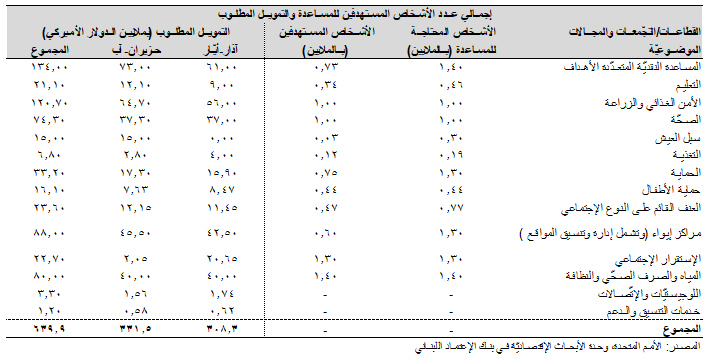
أمّا بالنسبة للتمويل المطلوب والبالغة قيمته 639.9 مليون دولار أميركي فسيتمّ توزيعه بشكل أساسي على مجالات المساعدة النقديّة المتعدّدة الأهداف (134.00 مليون د.أ.) والأمن الغذائي والزراعة (120.70 مليون د.أ.) ومراكز الإيواء (88.00 مليون د.أ.) والمياه والصرف الصحّي والنظافة (80.00 مليون د.أ.) والصحّة (74.30 مليون د.أ.) للذكر لا الحصر. بالتفاصيل، ستستهدف المساعدات النقديّة المتعددة الأهداف بشكل رئيسي الأفراد المتأثّرين بالنزاع والمقيمين خارج مراكز الإيواء الجماعيّة (ومنهم الأشخاص الموجودون في المناطق التي يصعب الوصول إليها والتي لا تزال أسواقها تعمل) وذلك بالتنسيق مع وزارة الشؤون الاجتماعيّة تماشياً مع أهداف الحماية الإجتماعيّة الوطنيّة.
أمّا لجهة الأمن الغذائي والزراعة، فقد أشارت الأمم المتّحدة إلى أنّ المساعدات الغذائيّة المقدّمة داخل مراكز الإيواء الجماعيّة ستكون على شكل وجبات ساخنة ومساعدات غذائيّة جاهزة للأكل. بالإضافة إلى ذلك، أوضحت الأمم المتحدة أنّه سيتمّ إتخاذ الترتيبات اللازمة بالتنسيق مع قطاعي الصحّة والمياه والصرف الصحّي والنظافة الصحيّة لتقديم الدعم للمطابخ الجماعيّة وترتيبات الطهي الذاتي الآمنة كتوفير القدرات المناسبة للطهي وضمان الممارسات الآمنة في مناولة الأغذية. بالنسبة للإيواء، كشفت الأمم المتّحدة أنّ مراكز الإيواء لن تستعمل بعد الآن كحلول سكنيّة مؤقّتة بل كترتيبات لإستضافة النازحين لفترات زمنيّة طويلة. وقد أشارت الأمم المتّحدة إلى أنّ الأفراد المقيمين خارج مراكز الإيواء يواجهون تحديات متزايدة نتيجة إرتفاع بدلات الإيجار وتراجع الدخل وإستنزاف المدخّرات مما يخفّف من قدرة الأسر على الحفاظ على مساكنها الخاصّة. أما لناحية مراكز الإيواء الجماعيّة، فمن المتوقّع أن يستمر تشغيل عدد أكبر من مواقع الإيواء لفترات أطول من المتوقّع، الأمر الذي يستدعي تنفيذ أعمال صيانة وإصلاح دنيا. أمّا لناحية المياه والصرف الصحّي والنظافة، أوضحت الأمم المتّحدة أن الإحتياجات ذات الأولوّية تشمل إصلاح وصيانة البنى التحتيّة للمياه والصرف الصحي المتضرّرة وتوفير خدمات مياه طارئة وضمان الوصول إلى مرافق الصرف الصحي الطارئة. أمّا بالنسبة للأشخاص المقيمين خارج مراكز الإيواء، فلم يعد التركيز مقتصراً على تقديم الدعم الفوري للأسر فقط، بل أصبح يشمل أيضاً ضمان إستمراريّة خدمات المياه في المناطق المتأثرة. أمّا لجهة الصحّة، فقد علّقت الأمم المتّحدة بأنّ إحتياجات الصحّة الطارئة تشمل مراكز رعاية الصدمات الطارئة (Emergency Trauma Care) للأشخاص المصابين والولوج لخدمات الرعاية الأوليّة في مراكز النزوح وتوفّر الأدوية الأساسيّة وعلاجات الأمراض المزمنة للذكر لا الحصر.