




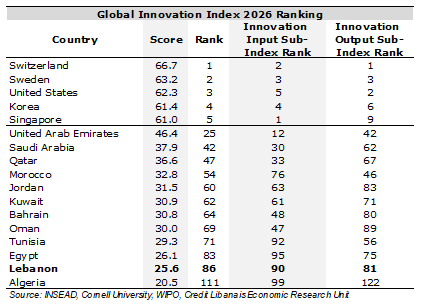
INSEAD, in collaboration with Cornell University and the World Intellectual Property Organization (WIPO), published the 19th edition of the “Global Innovation Index 2026 – Powering Entrepreneurs at the Frontier of Science”. The report revealed that the Global Innovation Index (GII) provides a detailed analysis of the current state of global innovation. According to the report, innovation and creativity are becoming increasingly important drivers of economic growth, development and competitiveness amid rapid technological advances, particularly in artificial intelligence. The 2026 edition highlights the growing role of deep science entrepreneurship, with more than 30,000 deep science startups and spinouts created since the year 2000, representing a combined enterprise value of around $8 trillion. This activity is also expanding beyond traditional innovation hubs into middle-income economies, particularly in health technologies, advanced manufacturing and agritech. The report emphasizes that strong links between research and industry, effective intellectual property and technology transfer systems, long-term financing, skilled talent and supportive policy environments are essential to building effective innovation ecosystems. The 2026 GII comprises data collected from 139 economies and is composed of two sub-indices: The Innovation Input Sub-Index and the Innovation Output Sub-Index. In details, the overall score is the average score of the innovation input & output sub-indices, which ranges between 0 and 100. The Innovation Input Sub-Index is composed of five pillars (Institutions, Human Capital and Research, Infrastructure, Market Sophistication, and Business Sophistication), while the Innovation Output Sub-Index comprises two pillars (Knowledge and Technology Outputs and Creative Outputs). On a global level, Switzerland topped the list in the GII 2026 with a score of 66.7, followed by Sweden (score: 63.2), the United States (score: 62.3), Korea (score: 61.4), and Singapore (score: 61.0), among others. On a regional basis, the UAE came first in the GII 2026 rankings of Arab countries with a score of 46.4 (global rank: 25), followed by Saudi Arabia (score: 37.9; global rank: 42), Qatar (score: 36.6; global rank: 47), and Morocco (score: 32.8; global rank: 54), only to name a few.
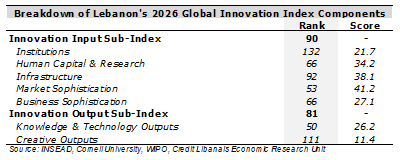
As far as Lebanon is concerned, the latter scored 25.6 in the GII 2026, occupying the 11th position among its Arab peers and the 86th place in the world (compared to a score of 23.6 in the GII 2025). In detail, Lebanon ranked 90th globally in the Input Innovation Sub-Index and 81st in the Output Innovation Sub-Index. On the Input Sub-Index front, Lebanon ranked 132nd in the world in the “Institutions” pillar (score: 21.7), 66th in the “Human Capital & Research” pillar (score: 34.2), 92nd in the “Infrastructure” pillar (38.1), 53rd in the “Market Sophistication” pillar (score: 41.2), and 66th in the “Business Sophistication” pillar (score: 27.1). With respect to the Output Sub-Index, Lebanon positioned 50th in the world in the “Knowledge & Technology Outputs” pillar (score: 26.2) and 111th in the “Creative Outputs” pillar (score: 11.4).
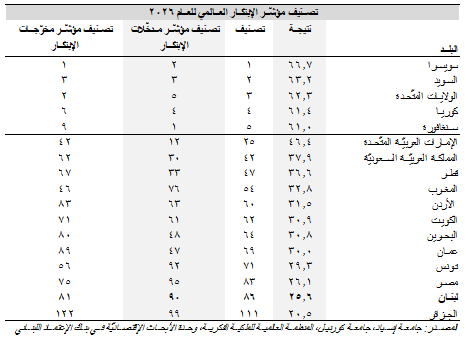
أصدرت جامعة إنسياد (INSEAD) بالتعاون مع جامعة كورنيل (Cornell) والمنظّمة العالميّة للملكيّة الفكريّة (WIPO) النسخة 19 من التقرير المُعنوَن "مؤشّر الإبتكار العالمي للعام 2026 – دعم روّاد الأعمال في المجالات العلميّة الرائدة". ذكر التقرير بأنّ مؤشّر الابتكار العالمي يعطي تحليل شامل عن الوضع الحالي للابتكار العالمي. وبحسب التقرير، تكتسب الابتكارات والقدرات الإبداعيّة أهميّة متزايدة باعتبارها من الركائز الأساسيّة الداعمة للنمو الاقتصادي والتنمية وتعزيز القدرة التنافسيّة في ظلّ التحوّلات التكنولوجيّة المتسارعة، ولا سيّما التطوّرات اللافتة في مجال الذكاء الاصطناعي. وفي هذا الإطار، تسلّط نسخة العام 2026 الضوء على الأهميّة المتنامية لريادة الأعمال القائمة على العلوم العميقة، إذ تمّ تأسيس أكثر من 30 ألف شركة ناشئة ومنبثقة في هذا المجال منذ العام 2000 بقيمة إجمالية للمؤسسات تُقدّر بنحو 8 تريليون د.أ. كما يشير التقرير إلى اتّساع نطاق هذا النشاط ليشمل، إلى جانب مراكز الابتكار التقليديّة، عدداً متزايداً من الاقتصادات متوسطة الدخل، ولا سيّما في مجالات التكنولوجيا الصحيّة والتصنيع المتقدّم والتكنولوجيا الزراعيّة. وفي هذا السياق، يؤكّد التقرير أهميّة توطيد الروابط بين قطاعَي البحث والصناعة، وتعزيز فعاليّة أنظمة الملكيّة الفكرية ونقل التكنولوجيا، فضلاً عن توفير التمويل طويل الأجل والكفاءات المتخصّصة، وإرساء بيئة سياسات ملائمة ومحفّزة للاستثمار، بما يسهم في بناء منظومات ابتكار متينة وفعّالة. في هذا السياق، يتضمّن مؤشّر الإبتكار العالمي للعام 2026 معلومات عن 139 بلداً وهو يتألّف من مؤشّرين، ألا وهما مؤشّر مدخّلات الإبتكار (Input Sub-Index) ومؤشّر مخرّجات الابتكار (Output Sub-Index). بالتفاصيل، فإنّ نتيجة المؤشّر تحتسب على أساس المتوسّط بين نتائج مؤشّر مدخّلات الإبتكار ومؤشّر مخرّجات الإبتكار والتي تتراوح بين 0 و100. كما وأنّ مؤشّر مدخّلات الإبتكار يتضّمن خمسة عوامل (المؤسّسات، والرأسمال البشري والأبحاث، والبنى التحتيّة، وتطوّر السوق، وتطوّر الأعمال)، فيما يتضّمن مؤشّر مخرّجات الإبتكار عاملين (المخرّجات المعرفيّة والتكنولوجيّة، والمخرّجات الإبداعيّة). على الصعيد العالمي، أتت سويسرا في المرتبة الأولى في مؤشّر الإبتكار العالمي للعام 2026 بنتيجة 66.7، تبعتها السويد (النتيجة: 63.2) والولايات المتحّدة (النتيجة: 62.3) وكوريا (النتيجة: 61.4) وسنغافورة (النتيجة: 61.0) للذكر لا للحصر. إقليميّاً، جاءت دولة الإمارات العربيّة المتحّدة في المركز الأوَّل بين نظرائها العرب في مؤشّر الإبتكار العالمي للعام 2026 مُسجِّلةً نتيجة 46.4 (المركز العالمي: 25)، تَبِعَتها كلٌّ من المملكة العربيّة السعوديّة (النتيجة: 37.9؛ المركز العالمي: 42) وقطر (النتيجة: 36.6؛ المركز العالمي: 47) والمغرب (النتيجة: 32.8؛ المركز العالمي: 54) للذكر لا للحصر.
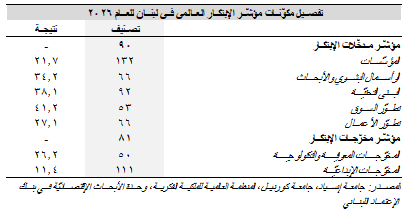
محليّاً، سجّل لبنان نتيجة 25.6 في مؤشّر الإبتكار العالمي للعام 2026 محتلّاً بذلك المركز الحادي عشر بين نظرائه العرب والمركز 86 في العالم (مقارنةً بنتيجة 23.6 في مؤشّر العام 2025). بالتفاصيل، جاء لبنان في المرتبة 90 عالميّاً في مؤشّر مدخّلات الإبتكار والمركز 81 في مؤشّر مخرّجات الإبتكار. وعلى صعيد مؤشّر مدخّلات الابتكار، احتلّ لبنان المركز ال132 في العالم في عامل المؤسّسات (النتيجة: 21.7) و66 في عامل الرأسمال البشري والأبحاث (النتيجة: 34.2) و92 في عامل البنى التحتيّة (النتيجة: 38.1) و53 في عامل تطوّر السوق (النتيجة: 41.2) و66 في عامل تطّور الأعمال (النتيجة: 27.1). وفيما يختصّ بمؤشّر مخرّجات الإبتكار، جاء لبنان في المرتبة 50 عالميّاً في عامل المخرّجات المعرفيّة والتكنولوجيّة (النتيجة: 26.2) وال111 في عامل المخرّجات الإبداعيّة (النتيجة: 11.4).