




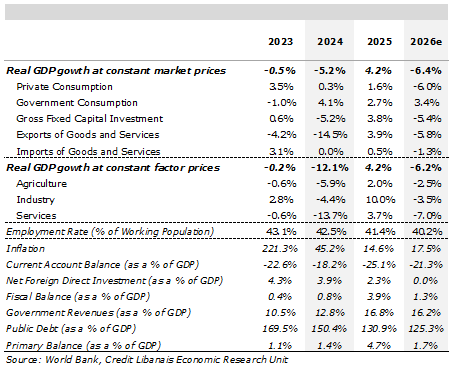
The World Bank released its Lebanon Macro Poverty Outlook (MPO) report in which it estimated Lebanon’s economy to contract by 6.4% in 2026, thereby reversing the 4.2% rebound registered in 2025. More specifically, the MPO report revealed that construction permits dropped by 46.7% month-on-month, while the number and value of foreign currency cleared checks fell by 12.8% and 16.3% respectively. The report added that notwithstanding the fiscal pressures emanating from the conflict, the overall fiscal balance has remained in surplus at $1 billion, the equivalent of 2.5% of GDP through May 2026, thereby rising by 31.9% year-on-year. In details, the MPO report revealed that revenues increased by 26.6% y-o-y buoyed by a rise in gasoline excise tax receipts, while expenditures rose by 23.7% on the back of higher personnel costs as well as the rise in conflict-related increases in capital expenditure, hospitalizations, and budget advances. On the inflation front, the World Bank indicated that inflationary pressures in Lebanon intensified during the first half of 2026, with the annual inflation rate accelerating to 17.3%, compared to 14.6% in 2025. More specifically, the prices of water, electricity, gas, and other fuels increased by 25.3% annually as at end of June 2026, while transportation costs surged by 29.5% over the same period. The report attributed these inflationary pressures to disruptions in supply chains, higher freight costs, and rising international oil prices. On the monetary front, the report added that the stability of the LBP to USD exchange rate was supported by tight liquidity in LBP. Nevertheless, the report noted that foreign currency reserves contracted by $458 million to $11.6 billion in mid-August 2026, down from $12.1 billion in mid-February 2026 as Banque Du Liban increasingly resorted to its reserves to meet FX obligations amid reduced FX availability in the market. The World Bank mentioned in this respect that foreign currency reserves remained equivalent to circa 6.6 months of imports. On the social front, the World Bank highlighted the deterioration in household welfare following the escalation of hostilities in March 2026. In this context, the report noted that displaced households have become increasingly dependent on informal support networks and lower resources while suffering from losses in income and productive assets. Moreover, the MPO report revealed that the number of people experiencing crisis or emergency levels of food insecurity is estimated to have reached 1.24 million in 2026, compared to 874,000 in 2025, with the South and Nabatieh regions being among the most severely affected regions. As far as Lebanon’s external sector is concerned, the report mentioned that the country's trade deficit widened by 8.8% y-o-y to $10.2 billion YTD July 2026, as exports contracted by 16.6%, while imports increased by 4.2% owing to conflict-related disruptions affecting export activity, coupled with higher oil prices and elevated insurance premiums. In parallel, the report noted that the value of energy imports increased by 9.0% annually to $3.0 billion during the first seven months of 2026 despite a 31.0% decline in imported volumes, which placed further pressure on the country’s already deteriorating current account balance. Furthermore, the MPO report stated that EDL’s fuel-dependent generation cuts have forced households to absorb the elevated increases in private-generator prices, thereby hampering the purchasing power of citizens and aggravating the cost-of-living crisis.
As far as the outlook is concerned, the World Bank expects Lebanon’s real GDP to contract by 6.4% in 2026 on the back of the ongoing conflict in Lebanon and the Middle East. In addition, the report noted that the security situation is expected to severely affect tourism, while displacement, livelihood disruptions, and physical destruction continue to limit consumption and investment. Furthermore, the MPO report revealed that inflation is projected to rise to 17.5% in 2026 amid inflationary pressure from high energy and transport prices.
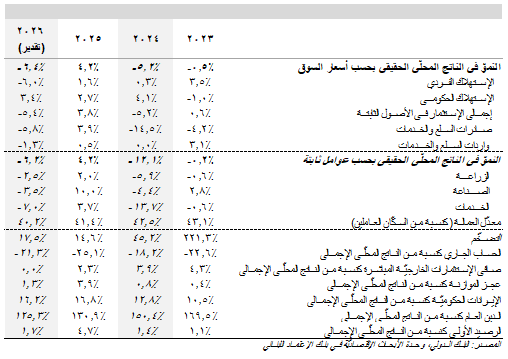
أصدر البنك الدولي تقريره حول آفاق الفقر في لبنان والذي توقّع من خلاله أن ينكمش الاقتصاد اللبناني بنسبة 6.4% في العام 2026، عاكساً بذلك الانتعاش الاقتصادي الذي سجّله خلال العام 2025 والبالغ 4.2%. بالتفاصيل، كشف التقرير أنّ رخص البناء قد تراجعت بنسبة 46.7% على صعيدٍ شهري في حين انخفض عدد وقيمة الشيكات المتقاصّة بالعملات الأجنبيّة بنسبة 12.8% و16.3% بالتتالي. وأضاف التقرير أنّه بالرغم من الضغوط الماليّة الناجمة عن النزاع، فقد استمرّت الماليّة العامّة بتسجيل فائض بلغ 1 مليار د.أ. (أيّ ما يعادل 2.5% من الناتج المحلّي الإجمالي، أيّ زيادة سنويّة نسبتها 31.9%) حتّى شهر أيّار 2026. وقد أشار التقرير إلى أنّ الإيرادات الحكوميّة قد ارتفعت بنسبة 26.6% على صعيدٍ سنويّ، مدعومةً بزيادة الإيرادات المحصّلة من رسم الاستهلاك على الوقود، في حين ارتفعت النفقات العامّة بنسبة 23.7% نتيجة زيادة رواتب العاملين في القطاع العامّ إضافةً إلى ارتفاع النفقات الرأسماليّة ونفقات الاستشفاء وسلفات الخزينة المرتبطة بالنزاع. على صعيد التضخّم، أشار البنك الدولي إلى تفاقم الضغوط التضخّميّة في لبنان خلال النصف الأوّل من العام 2026 حيث زاد معدّل التضخّم السنويّ إلى 17.3% مقارنةً مع 14.6% في العام 2025. بالتفاصيل، ارتفعت أسعار المياه والكهرباء والغاز وأنواع الوقود الأخرى بنسبة 25.3% على صعيدٍ سنويّ كما في نهاية شهر حزيران 2026، في حين زادت كلفة النقل بنسبة 29.5% خلال الفترة نفسها. وقد عزا التقرير هذه الضغوط التضخّميّة إلى الاضطرابات في سلاسل الإمداد (Supply Chains) وارتفاع تكاليف الشحن وأسعار النفط العالميّة المتصاعدة. أمّا على الصعيد النقدي، فقد أشار التقرير إلى أنّ استقرار سعر صرف الليرة اللبنانيّة مقابل الدولار الأميركي قد أتى مدعوماً بشحّ السيولة بالليرة اللبنانيّة. إلّا أنّ التقرير لفت إلى تراجع الاحتياطات بالعملات الأجنبيّة لدى مصرف لبنان بـ458 مليون د.أ. إلى 11.6 مليار د.أ. في منتصف شهر آب 2026، مقارنةً مع 12.1 مليار د.أ. في منتصف شهر شباط 2026 وذلك في ظلّ استخدام مصرف لبنان لاحتياطاته تلبيةً لالتزاماته بالعملات الأجنبيّة بالتزامن مع تراجع توافر العملات الأجنبيّة في السوق. وذكر البنك الدولي في هذا الإطار أنّ الاحتياطات بالعملات الأجنبيّة لا تزال كافية لتغطية حوالي 6.6 أشهر من المستوردات. على الصعيد الاجتماعي، سلّط البنك الدولي الضوء على تدهور الأوضاع المعيشيّة للأسر في لبنان نتيجة تصاعد الأعمال العدائيّة في شهر آذار 2026. وفي هذا الإطار، أشار التقرير إلى تزايد اعتماد الأسر النازحة على شبكات الدعم غير الرسميّة والموارد الماليّة المتضائلة في ظلّ خسارة في مداخيلهم وفي أصولهم المنتجة. بالإضافة إلى ذلك، كشف التقرير أنّ عدد الأشخاص الذين يعانون من مستويات أزمة أو طوارئ من انعدام الأمن الغذائي يُقدَّر بحوالي 1.24 مليون شخص في العام 2026، مقارنةً مع 874،000 شخص في العام 2025، مع الإشارة إلى أنّ منطقتَي الجنوب والنبطيّة تُعتبران من بين المناطق الأكثر تضرّراً. أمّا على صعيد القطاع الخارجي في لبنان، فقد أشار التقرير إلى ارتفاع عجز الميزان التجاري بنسبة 8.8% على صعيدٍ سنويّ إلى 10.2 مليار د.أ. حتّى شهر تمّوز 2026 في ظلّ تراجع الصادرات بنسبة 16.6% وارتفاع المستوردات بنسبة 4.2% نتيجة الاضطرابات المرتبطة بالنزاع والتي أثّرت سلباً على النشاط التصديري، تزامناً مع ارتفاع أسعار النفط وأقساط التأمين. بالتوازي، لفت التقرير إلى ارتفاع قيمة مستوردات الطاقة بنسبة 9.0% على صعيدٍ سنويّ إلى 3.0 مليار د.أ. خلال الأشهر السبعة الأولى من العام 2026 بالرغم من انخفاض الكميّات المستوردة بنسبة 31.0%، الأمر الذي فرض ضغوطاً إضافيّة على ميزان الحساب الجاري الذي كان ولا يزال يشهد تدهوراً. كذلك أشار التقرير إلى أنّ تخفيض مؤسّسة كهرباء لبنان لإنتاج الكهرباء المعتَمِد على الوقود قد أجبر الأسر على تحمّل الزيادات الكبيرة في أسعار اشتراكات المولّدات الكهربائيّة الخاصّة، ممّا أدّى إلى تآكل قدرتها الشرائيّة وتفاقم أزمة غلاء المعيشة.
أمّا فيما يخصّ النظرة المستقبليّة للعام 2026، يتوقّع البنك الدولي أن ينكمش الناتج المحلّي الإجمالي الحقيقي للبنان بنسبة 6.4% في العام 2026 في ظلّ استمرار النزاع في لبنان وفي منطقة الشرق الأوسط. وأضاف التقرير أنّه من المتوقّع أن يؤثّر الوضع الأمني بشكلٍ كبير على القطاع السياحي، في حين يستمرّ النزوح وتعطّل سبل العيش والدمار المادّي في الحدّ من الاستهلاك والاستثمار. بالإضافة إلى ذلك، توقّع التقرير أن يرتفع معدّل التضخّم إلى 17.5% في العام 2026 نتيجة الاضطرابات في سلاسل الإمداد المرتبطة بالنزاع وارتفاع تكاليف الطاقة والنقل.